🚦 Signs You Mixed Up Target Audience and Buyer Persona (And Fixes)
🚦 Signs You Mixed Up Target Audience and Buyer Persona (And Fixes)
When our marketing feels “fine”… but sales feel slow… it’s often one quiet mistake:
We mixed up the target audience and the buyer persona.
And when those two get blurred, everything gets blurry:
our pages sound safe… but not sharp
our ads reach people… but not the right people
our CTA is there… but it feels weak
our consumer behavior signals look ugly (low CTR, high bounce, low clicks)
This post shows the red flags and the fast fixes we use inside The Buyer Clarity System™.
If we can’t name our target audience in one clear “For…” line, and we also can’t name the persona’s pain, fear, and proof needs, we mixed them up. Fix it by separating roles: audience = group, persona = decision triggers.
🧠 The simple difference (no confusion)
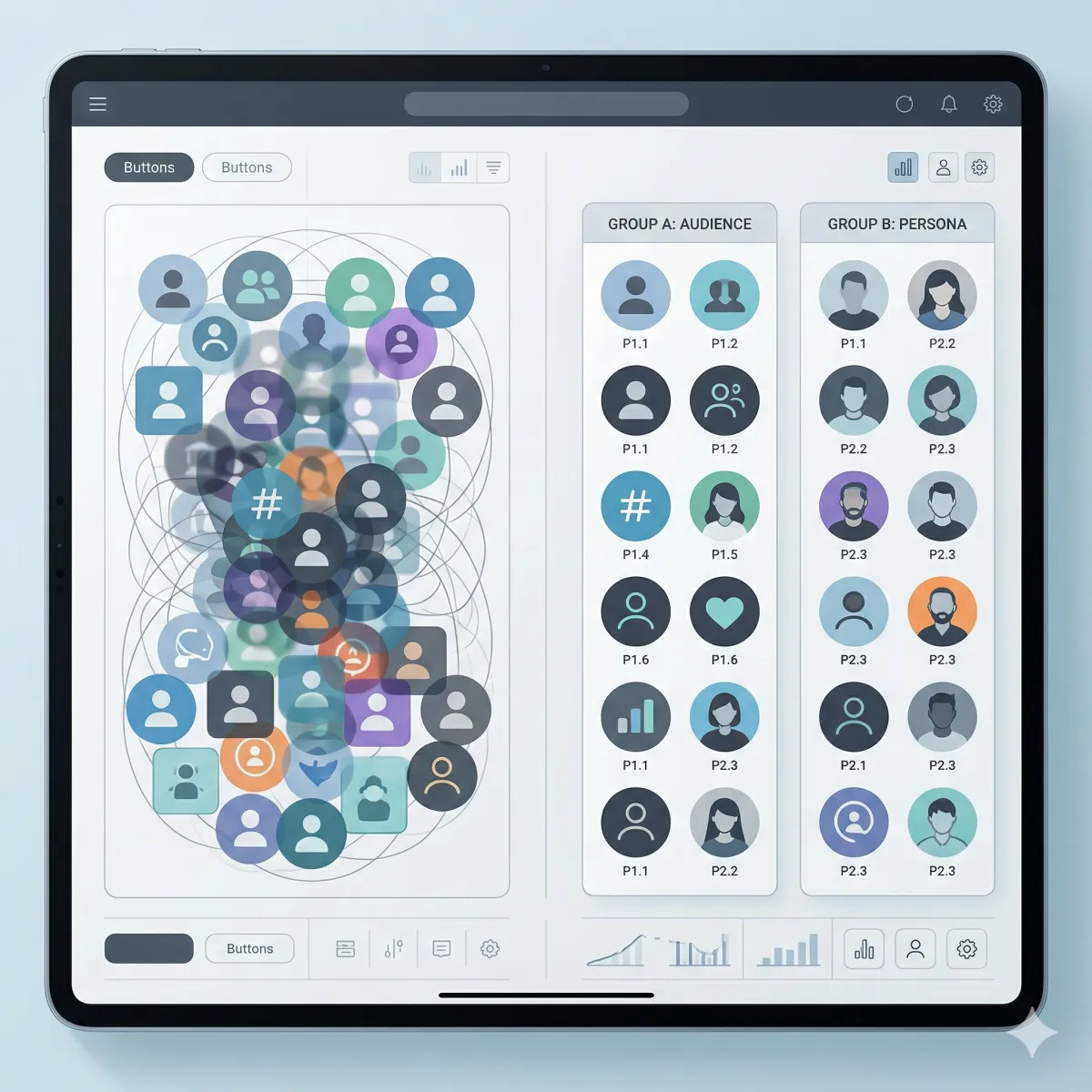
🎯 Target audience = the group
Our target audience answers: Who are we aiming at?
Example: “Busy parents in our city.”
👤 Buyer persona = the one person inside the group
Our buyer persona answers: Why do they buy or not buy?
Example: “A busy parent who feels guilty, fears wasting money, and needs a fast first win.”
Audience sets the boundaries.
Persona drives the copy.
🚥 The biggest signs we mixed them up
🌫️ Sign: Our page feels vague and “for everyone”
👀 What it looks like
“We help anyone…”
“Perfect for all businesses…”
“For everyone who wants results…”
🧩 What it means
We never locked a target audience.
🛠️ Fast fix ✅
Write this one line at the top of the page:
For [group] who want [result] without [pain] in [time].
That’s the audience boundary.
🎯 Sign: Our ads are broad, expensive, and confusing
📉 What it looks like
low CTR
high CPC
many clicks, few leads
comments like “Is this for me?”
🔍 What it means
We’re trying to use persona copy to fix a targeting problem. But the target audience is still too wide.
🧷 Fast fix ✅
Tighten the target audience first (the lake).
Then write persona pain and proof (the fish).
🧷 Sign: Our CTA feels generic and weak
🧾 What it looks like
“Learn more”
“Submit”
“Contact us”
“Get started” (but no clear next step)
🧠 What it means
Our persona stage is unclear, so the CTA does not feel safe.
✅ Fast fix ✅
Match CTA to stage (consumer behavior):
cold: Get the complimentary guide
warm: Start the trial / Book a quick demo
hot: Book now / Start now
🧬 Sign: Our “buyer persona” is only demographics
📋 What it looks like
age, income, job title
“likes coffee and travel”
no doubts, no triggers, no proof needs
🧱 What it means
We built an audience profile, not a real buyer persona.
🧪 Fast fix ✅
Add the missing persona fields:
pain
dream
trigger (why now)
past tries
doubt
proof needed
first safe step
48-hour win
🧻 Sign: Our FAQ doesn’t remove fear
🧾 What it looks like
filler questions
missing “Will this work for me?”
missing “What happens first?”
missing “How fast?” questions
🧠 What it means
Persona doubts are missing.
🧰 Fast fix ✅
Pull FAQs from real consumer behavior sources:
emails
DMs
support chats
ad comments
site search terms
Then put 4–6 micro-FAQs under the CTA.
🧲 Sign: We have proof, but it doesn’t help conversion
🧾 What it looks like
reviews buried in the footer
case studies hidden behind menus
proof from the wrong type of buyer
🧠 What it means
Proof isn’t persona-matched or it’s placed too late.
📌 Fast fix ✅
Put “like-me” proof:
under the headline
next to the CTA
near pricing (warm/hot)
Proof belongs where fear spikes.
🐢 Sign: Buyers stall and say “We’ll think about it”
🧾 What it looks like
repeat pricing visits
long delays
lots of questions
slow sales velocity
🧠 What it means
The persona needs clarity on steps and first wins.
⚡ Fast fix ✅
Add these blocks to the page:
3-step path with time tags
“what happens next” box
“week-one win” checklist
This reduces uncertainty fast.
🧰 The 10-minute rewrite that fixes it
Here’s how we separate audience and persona in one clean edit.
🧷 Rewrite step 1: The “For…” line (target audience)
Use this exact formula:
For [group] who want [result] without [pain] in [time].
Examples:
“For busy parents who want strength without long workouts.”
“For agency ops leads who want fewer late invoices without awkward chasing.”
This is the target audience.
🪞 Rewrite step 2: The persona mirror block (pain + proof)
Now write this under the For line:
“We’re tired of [pain].
We want [dream].
We tried [past try]. It didn’t work.
We need proof this will work for us.”
That’s your buyer persona voice.
🎛️ Rewrite step 3: One CTA that fits stage
Pick one primary CTA:
cold: guide
warm: trial/demo/audit
hot: book/buy
Then add micro-copy under the button:
“Start small. Takes 2 minutes. No big leap.”
This lowers risk.
📈 How we confirm the fix worked (consumer behavior signals)
Over the next 7 days, watch:
CTR goes up (message match)
bounce goes down (promise match)
time on page goes up (clarity)
CTA clicks go up (trust)
conversions go up (step fit)
Behavior doesn’t lie.
❓ FAQ — Target Audience vs. Buyer Persona Mix-Up
1) What’s the difference between target audience and buyer persona?
Our target audience is the group we aim at. Our buyer persona is the “one person” inside that group with pain, doubts, and proof needs.
2) How do we know we mixed up target audience and buyer persona?
If pages are vague, ads are broad, and CTAs are generic, we likely mixed them up. Consumer behavior often shows low CTR and high bounce.
3) What is the fastest fix when we mixed them up?
Write a clear “For…” line first (target audience). Then add persona pain, doubt, and proof needs right under it. Keep one stage-matched CTA.
4) What should our “For…” line say?
“For [group] who want [result] without [pain] in [time].” This sets the audience boundary fast.
5) How do we know our target audience is too broad?
If the message could fit almost anyone, it’s too broad. Also, if we get clicks but no real leads, our target audience is likely wide and unclear.
6) How do we know our buyer persona is too shallow?
If it’s mostly demographics and missing triggers, doubts, past tries, and proof needed, it’s not a strong buyer persona yet.
7) Why do ads get expensive when we mix these up?
Because targeting becomes messy. CTR drops, we pay for the wrong clicks, and those clicks bounce fast.
8) Where should proof go when persona is correct?
Put proof near the CTA and near pricing, where fear spikes. “Like-me” proof works best.
9) What CTA should we use for cold buyers?
Use a small step like “Get the complimentary guide” or “See how it works.”
10) What CTA should we use for warm or hot buyers?
Warm: trial/demo/audit CTAs. Hot: book/buy CTAs. The step must match readiness.
11) What should go in our FAQ section to convert?
Real questions from consumer behavior: emails, chats, DMs, comments, and site search terms. Put the top ones under the CTA.
12) How do we confirm the fix worked?
We should see CTR rise, bounce drop, CTA clicks rise, conversions improve, and faster time-to-yes.
📌 Key Takeaways
Target audience = the group (“For…” line)
Buyer persona = the decision triggers (pain, doubt, proof)
Red flags: vague pages, broad ads, generic CTAs, weak FAQs, buried proof
Fix fast: audience boundary first, persona mirror block second
Put proof by the CTA and answer doubts under the CTA
Confirm with consumer behavior KPIs over 7 days
This is buyer clarity inside The Buyer Clarity System™
🎁 Complimentary Ebook
Want the “For…” line templates, persona mirror blocks, and CTA-by-stage swipe file?
Grab our COMPLIMENTARY Buyer Clarity Guide here:
👉 Download your complimentary ebook now
🧭 Final Word
If our message feels blurry, our roles are blurry.
Pick the target audience first.
Then speak to the buyer persona inside it.
One group. One person. One next step.
That’s how we get fast wins—inside The Buyer Clarity System™.
