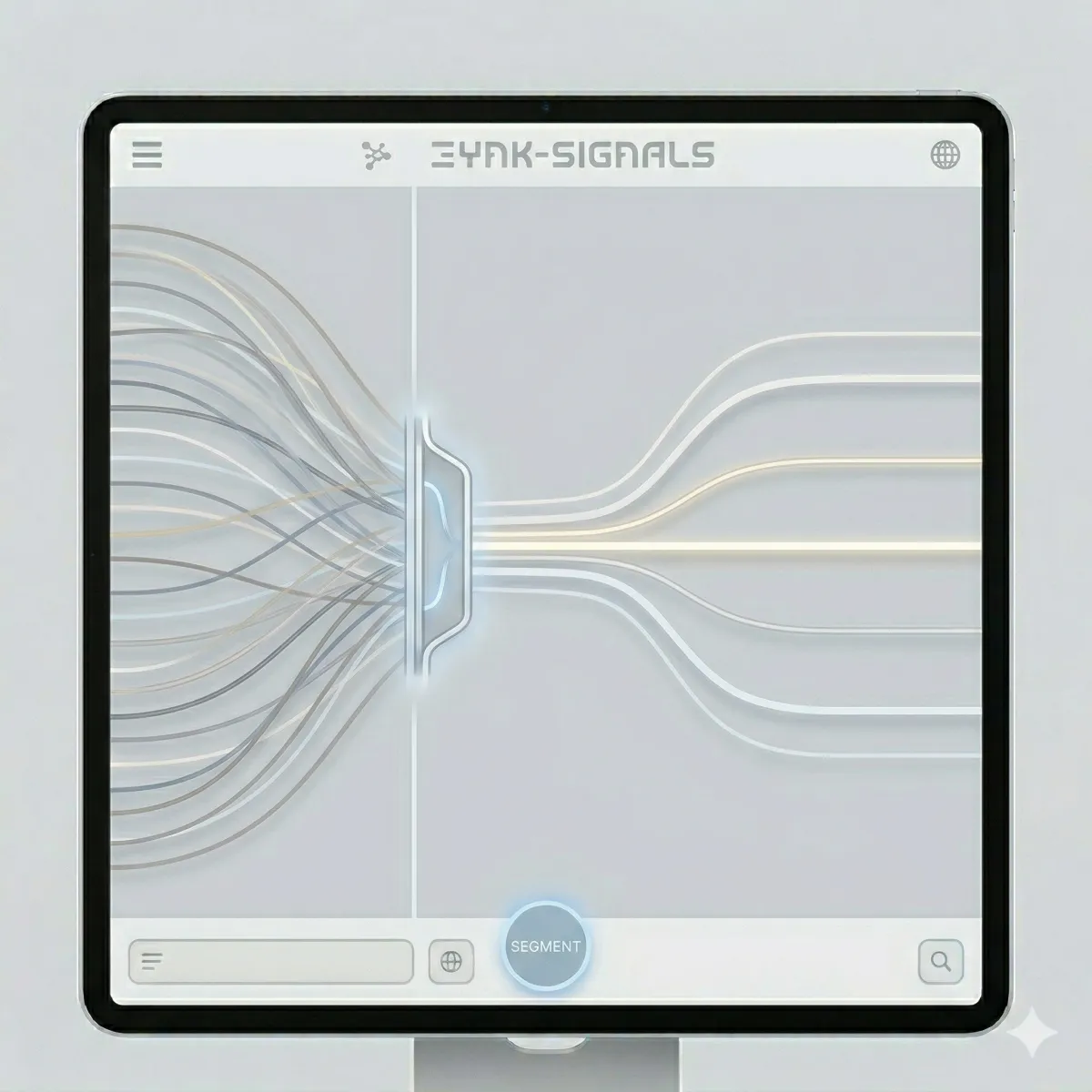
🧩 Segment Your Target Audience Without Persona Sprawl
🧩 Segment Your Target Audience Without Persona Sprawl
Persona sprawl is real.
We start with one buyer persona…
Then we notice a new “type.”
Then another.
Then another.
Soon we have 12 personas.
And none of them feel sharp.
The page gets generic.
Ads get messy.
Testing gets muddy.
And consumer behavior signals go flat.
So here’s the simple truth:
We can segment a target audience without building 20 personas.
We just need clean slices… and a rule for when a slice becomes a real buyer persona.
Use 3–5 behavior slices (cold/warm/hot, pain, urgency). Build one buyer persona per hot slice only. Keep everything else as a “message variation,” not a new persona.
🧠 First: target audience vs buyer persona (quick clarity)
🎯 Target audience = the lake
The target audience is the group we aim at.
👤 Buyer persona = the fish
The buyer persona is the one person story inside the lake that drives decisions.
We segment the lake into slices.
We only build personas for slices that buy.
💡 Why “persona sprawl” happens
Persona sprawl happens when we confuse:
a segment (a slice)
witha buyer persona (a full decision pattern)
Many slices exist.
Only a few deserve a full persona.
A persona takes work:
page copy
proof stack
FAQs
CTA and offer path
tests and tracking
So we reserve personas for the slices that matter most.
🧭 The simple segmentation plan (3–5 slices that stay clean)
We keep segmentation simple with a 3–5 slice plan:
Cold / Warm / Hot (behavior stage)
Pain type (what hurts most)
Urgency (how soon they need help)
That’s enough for almost any business.
❄️🌤️🔥 Slice #1–3: Stage slices (cold, warm, hot)
These are the cleanest slices because they match consumer behavior.
❄️ Cold slice (learning)
Signals:
reads blogs
watches short videos
asks “what is this?”
Best CTA: complimentary guide / checklist
🌤️ Warm slice (comparing)
Signals:
reads FAQs
visits pricing once
asks “will this work for us?”
Best CTA: trial / demo / audit
🔥 Hot slice (ready)
Signals:
repeat pricing visits
starts checkout
asks “how soon can we start?”
Best CTA: book/buy
These are not 3 personas.
These are 3 behavior slices.
🩹 Slice #4: Pain slice (what hurts most)
Inside one target audience, pain can differ.
Examples:
“We have no time” pain
“We wasted money before” pain
“We don’t trust agencies” pain
“We’re confused” pain
Pain slices help us write sharper headlines.
But pain slices become personas only if they buy differently.
⏱️ Slice #5: Urgency slice (how fast they need help)
Urgency is a big segmentation lever.
Two people can have the same pain…
but different urgency.
Low urgency: “later”
Medium urgency: “soon”
High urgency: “now”
Urgency changes:
offer size
CTA
timeline copy
pricing tolerance
Still, urgency does not automatically mean a new persona.
It’s often just a message variation.
✅ The rule: one buyer persona per HOT slice only
This is the rule that stops persona sprawl.
🧩 Persona rule
We only build a full buyer persona when a slice is:
hot (ready to act)
repeated (shows up often)
profitable (good budget)
clear fit (we solve it well)
If a slice is cold or warm, we keep it as a behavior segment with smaller offers.
Why? Because cold and warm need nurturing, not a full persona stack.
🧠 How to tell if a slice deserves a real buyer persona
A slice becomes a real buyer persona when it has different:
main fear
proof needed
objections
buying speed (velocity)
offer preference (guide vs trial vs call)
budget tolerance
If those are the same, it’s not a new persona.
It’s just a new angle.
🧰 The “persona light” option (when you don’t want a full persona)
Sometimes we just need a light version.
🪪 Persona Lite (5 fields)
pain
dream
doubt
proof needed
first step
That’s it.
Use Persona Lite for warm slices.
Save full personas for hot slices.
🧱 How to structure pages without 20 personas
We don’t need 20 pages.
We need:
1 hero page for the target audience
1 warm proof page
1 hot decision page
1 persona page per hot slice (only)
That’s usually 3–5 pages total.
Simple. Clean. Trackable.
🧭 Routing flow (send each slice to the right next step)
Here’s the easy routing plan:
Cold → guide page
Warm → proof page (case + FAQ)
Hot → decision page (pricing/booking)
Hot slice A → persona-specific page (if needed)
Hot slice B → persona-specific page (if needed)
This matches consumer behavior and keeps persona count low.
🧪 Example: Segmenting one target audience without persona sprawl
Target audience: “Small business owners who want more leads.”
Slices:
Cold: “learning marketing basics”
Warm: “comparing lead options”
Hot: “ready to book help now”
Pain slices:
“burned before”
“low time”
“low trust”
Urgency slices:
“need leads this week”
“need leads this quarter”
Personas built:
only for “need leads this week” (hot + urgent + clear fit)
and maybe “burned before” (hot + proof seeker)
Everyone else stays a segment, not a persona.
📊 How to use consumer behavior to keep segmentation honest
Your dashboard keeps you from guessing.
Track by slice:
CTR
bounce
time on page
CTA clicks
conversion rate
close rate
refunds
velocity
If one hot slice keeps winning, that’s your persona focus.
If a slice never buys, don’t build a persona for it.
🧯 Common mistakes (and fast fixes)
Mistake: building personas for cold traffic
Fix: use small offers and nurture, not full personas.
Mistake: creating a new persona for every pain phrase
Fix: group pains into 3–5 slices and test.
Mistake: mixing slices on one page
Fix: one main promise per page, and route by behavior.
Mistake: never retiring personas
Fix: retire personas that don’t convert or churn more.
❓ FAQ — Segment Target Audience Without Persona Sprawl
1) How do we segment a target audience without making 20 personas?
Use 3–5 behavior slices (cold/warm/hot, pain, urgency). Build full buyer persona profiles only for hot slices that buy.
2) What is persona sprawl?
Persona sprawl is when we create too many buyer persona profiles, which makes messaging generic and testing messy.
3) What are the best behavior slices to start with?
Cold, warm, and hot slices based on consumer behavior signals are the cleanest starting point.
4) When does a slice become a real buyer persona?
When the slice has different fears, proof needed, objections, offer preference, or buying speed—plus it shows strong buying intent.
5) Should we build personas for cold traffic?
Usually no. Cold traffic needs safe first steps and nurturing, not a full persona stack.
6) How many personas should we keep per target audience?
Most businesses do best with 1–3 core buyer persona profiles per target audience.
7) What is a Persona Lite?
A Persona Lite is a short version: pain, dream, doubt, proof needed, and first step. It’s useful for warm segments.
8) How do we route slices to different pages?
Cold goes to a guide page, warm goes to a proof page, hot goes to a decision page. Only hot winning slices get persona pages.
9) What KPIs tell us which slice deserves a persona?
Watch CTR, bounce, CTA clicks, conversion rate, close rate, refunds, and velocity by slice.
10) What is the biggest mistake in segmentation?
Making a new persona for every small difference. Better to test small angles first, then build personas only for proven buyers.
11) Can market segmentation reduce the need for many personas?
Yes. Clean market segmentation lets one strong buyer persona stay focused and still cover the right group.
12) How often should we review segments and personas?
Do a light check every 90 days and a deeper review every 6–12 months using consumer behavior signals.
📌 Key Takeaways
Segment the target audience into 3–5 clean behavior slices
Use cold/warm/hot first because it matches consumer behavior
Add pain and urgency slices as message angles
Build full buyer persona profiles only for hot slices that buy
Keep 1–3 personas per target audience max
Route traffic by stage to the right page and CTA
Let behavior KPIs decide what deserves a persona
This is buyer clarity inside The Buyer Clarity System™
🎁 Complimentary Ebook
Want the “3–5 slice” worksheet, routing map, and persona-lite template?
Grab our COMPLIMENTARY Buyer Clarity Guide here:
👉 Download your complimentary ebook now
🧭 Final Word
Most businesses don’t need more personas.
They need cleaner slices.
Segment your target audience by behavior. Build personas only for the slices that buy.
That’s how we stay focused and grow fast—inside The Buyer Clarity System™.
