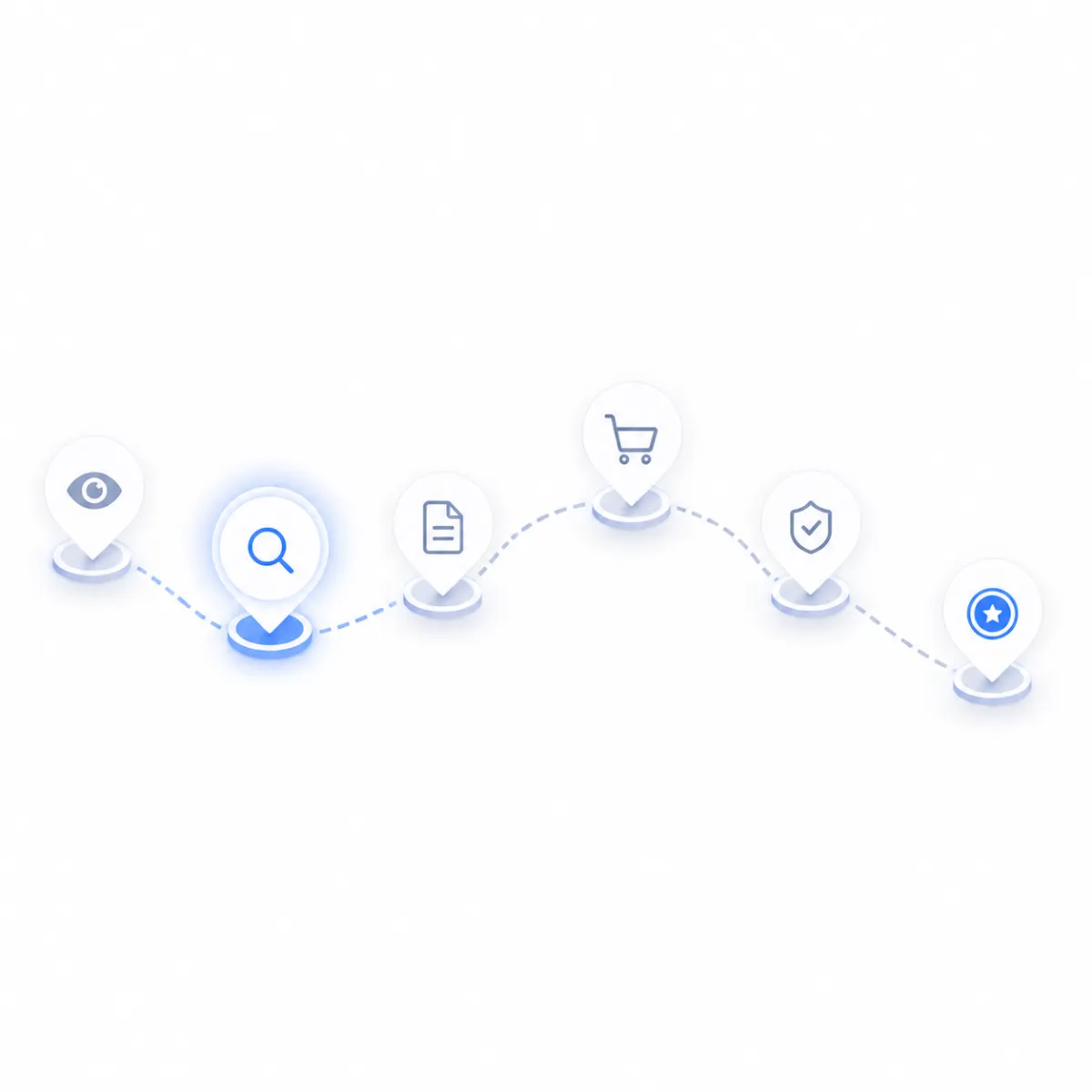
🎯 Retargeting by Consumer Behavior: Show the Next Right Step
🎯 Retargeting by Consumer Behavior: Show the Next Right Step
Most retargeting is lazy.
Someone visits a page.
Then they see the same ad again.
And again.
And again.
“Buy now.”
“Book now.”
“Still interested?”
“Don’t forget us.”
That is not a strategy.
That is digital nagging.
Good retargeting does not chase people.
Good retargeting guides people.
It watches consumer behavior and asks:
“What does this buyer need next?”
That next step may be:
a clear explanation
a proof pack
a comparison page
a starter offer
a trial
a call
a smaller CTA
a 48-hour win
The goal is simple:
Move the buyer one step closer.
Not ten steps.
One step.
And it supports our strategic goal to rank for buyer persona because smart retargeting only works when we understand what the buyer persona sees, does, feels, and needs before deciding.
The best retargeting plan matches ads to behavior at each stage. Use a ladder: view → read → proof → compare → trial → sale. Show clarity ads to bouncers, proof ads to deep readers, value ads to pricing visitors, friction-fix ads to abandoners, and decision ads to hot buyers.
🧠 What Is Retargeting by Consumer Behavior?
Retargeting by consumer behavior means showing follow-up ads based on what buyers actually did.
Not just:
“They visited our site.”
But:
they bounced fast
they read the whole page
they clicked the FAQ
they watched a demo
they visited pricing
they clicked the CTA
they started a form
they abandoned checkout
they came back twice
they booked but did not show
Each action tells us something.
And each action deserves a different next message.
👤 Why Retargeting Starts With Buyer Persona
A buyer persona is the one-person story inside your target audience.
It tells us:
what the buyer wants
what hurts right now
what they fear
what proof they need
what first step feels safe
what makes them decide
Retargeting fails when it ignores the buyer persona.
Example:
A Proof-Seeker reads your case study, then sees an ad that says:
“Buy now!”
Too soon.
They need more proof.
A Time-Poor buyer clicks your CTA but quits the long form, then sees an ad for a long webinar.
Wrong.
They need a shorter path.
A Budget-Starter visits pricing twice, then sees a premium offer ad.
Bad fit.
They need value clarity and a safe starter option.
Retargeting works when the message matches the buyer persona’s next fear.
🚨 The Big Mistake: Treating All Visitors the Same
Most businesses build one retargeting audience:
“All website visitors.”
Then they show one ad.
That is too broad.
Because not all visitors are equal.
A person who bounced after 5 seconds is not the same as a person who visited pricing three times.
A person who read a blog is not the same as a person who clicked “Book a call.”
A person who watched a demo is not the same as a person who abandoned checkout.
Different behavior.
Different stage.
Different buyer persona clue.
Different next step.
🪜 The Retargeting Ladder
Use this simple ladder:
👀 View — they saw you
📖 Read — they showed interest
⭐ Proof — they need trust
⚖️ Compare — they are weighing choices
🧪 Trial — they need a safe first step
💰 Sale — they are ready to decide
🔁 Post-Sale — they need onboarding, referral, or next buy
The ladder keeps retargeting helpful.
Instead of shouting “buy,” we show the next right step.
👀 Stage 1: View — They Saw You, But Did Not Engage
This is the coldest retargeting stage.
They may have:
visited a page for a few seconds
bounced fast
watched 3 seconds of a video
clicked an ad by accident
landed on the wrong page
scanned but did not scroll
This does not mean they hate you.
It means they did not see fit fast enough.
🧠 What This Behavior Usually Means
Fast bounce often means:
wrong audience
weak hook
unclear “for who” line
bad message match
page loaded too slow
CTA felt too big
buyer did not understand the value
The buyer persona question is:
“Did they know this was for them?”
🎯 Best Retargeting Message for View Stage
Use a clarity ad.
Do not push a sale yet.
Say:
who this is for
what problem it fixes
what simple first step to take
Copy template
“For [target audience] who want [result] without [pain].
Start with one simple step.”
Example
“For small business owners who want better leads without wasting ad spend.
Start with the Buyer Persona Checklist.”
🔘 Best CTA for View Stage
Use a small CTA:
“Get the guide”
“See the checklist”
“Watch the short video”
“See the 3 steps”
“Start here”
A bounced visitor usually does not need “Book a call.”
They need a smaller door.
📊 KPIs for View Stage
Track:
retargeting CTR
bounce after retarget click
time on page
checklist downloads
guide opt-ins
If bounce stays high, the clarity problem is not fixed.
📖 Stage 2: Read — They Stayed, Scrolled, or Clicked
Now we have interest.
They may have:
scrolled 50% or more
read a blog post
spent time on page
clicked an internal link
watched part of a video
saved or shared a post
read an FAQ
This buyer is warmer.
But warm is not hot.
Do not jump too fast.
🧠 What This Behavior Usually Means
Reading behavior can mean:
they care about the topic
they are trying to understand
they may be researching
they may still be unsure
they need proof or simple next steps
The buyer persona question is:
“What question are they trying to answer?”
🎯 Best Retargeting Message for Read Stage
Use an education-to-proof ad.
Give them the next useful piece.
Copy template
“You read about [topic].
Now see how to use it in [simple next step].”
Example
“You read about consumer behavior.
Now see how to turn it into a buyer persona that converts.”
🔘 Best CTA for Read Stage
Use a medium-small CTA:
“See examples”
“Get the worksheet”
“Build your board”
“Get the proof pack”
“Take the next step”
The buyer is interested.
Help them apply it.
📊 KPIs for Read Stage
Track:
CTR
repeat visits
resource downloads
proof clicks
email signups
scroll depth on follow-up page
If they read but never click, your next step may be unclear.
⭐ Stage 3: Proof — They Need Trust Before They Move
Proof behavior shows up when buyers:
click testimonials
read case studies
visit reviews
scroll to proof sections
click FAQs
compare examples
return to the same page
This is a big buyer persona clue.
They are not cold.
They are cautious.
🧠 What This Behavior Usually Means
Proof behavior often means:
“Will this work for me?”
“Can I trust this?”
“Have people like me done this?”
“What happens if I try it?”
“What if this is another waste?”
This is common for Proof-Seekers and Budget-Starters.
🎯 Best Retargeting Message for Proof Stage
Use a proof ad.
Show real proof only.
No fake stats.
No fake reviews.
No fake stories.
Copy template
“Still checking fit?
See how [buyer type] used [solution] to solve [pain].”
Example
“Still checking fit?
See how small teams use consumer behavior to build a sharper buyer persona.”
🔘 Best CTA for Proof Stage
Use trust-building CTAs:
“Get the proof pack”
“See examples”
“View the case”
“See how it works”
“Compare the fit”
Proof-stage buyers do not need pressure.
They need evidence.
📊 KPIs for Proof Stage
Track:
case study clicks
proof pack downloads
FAQ clicks
return visits
CTA clicks after proof
conversion rate
If proof ads get clicks but no action, the CTA may still feel too big.
⚖️ Stage 4: Compare — They Are Weighing Options
Compare behavior shows up when buyers:
visit pricing
visit competitor pages
search “best” or “vs”
read comparison pages
ask “what’s included?”
click package details
visit the same page more than once
check reviews and FAQs together
This buyer is close.
But they need help choosing.
🧠 What This Behavior Usually Means
Compare behavior means:
value matters
risk is active
fit is still unclear
the buyer wants a safe choice
they may need role-based guidance
they may fear choosing wrong
The buyer persona question is:
“What would make this choice feel safe?”
🎯 Best Retargeting Message for Compare Stage
Use a fit and value ad.
Show:
who it is for
what is included
how it compares
what step is safest
Copy template
“Still comparing?
Here is the honest fit and the safest first step.”
Example
“Still comparing buyer persona options?
See what is included, who it fits, and where to start.”
🔘 Best CTA for Compare Stage
Use decision-support CTAs:
“Compare options”
“See what’s included”
“Choose the starter path”
“Find your best fit”
“Get the fit guide”
This helps buyers choose without feeling trapped.
📊 KPIs for Compare Stage
Track:
pricing page return visits
plan clicks
CTA clicks
comparison page conversions
call bookings
close rate
price objections
If they compare a lot but do not act, add a stronger default option.
Example:
“Most first-time buyers start with the 48-hour audit.”
🧪 Stage 5: Trial — They Need a Safe First Step
Trial behavior shows up when buyers:
download a guide
sign up for a free tool
join a trial
request an audit
start a starter offer
attend a webinar
use a calculator
save a checklist
This buyer has raised their hand.
Now the job is to create momentum.
🧠 What This Behavior Usually Means
Trial behavior means:
they are interested
they want safety
they are not fully ready
they need a first win
they need follow-up
they may need setup help
The buyer persona question is:
“What first win will make them trust us?”
🎯 Best Retargeting Message for Trial Stage
Use a first-win ad.
Do not just remind them they signed up.
Show the next action.
Copy template
“You started with [trial/resource].
Now get your first win with [next step].”
Example
“You downloaded the Buyer Persona Guide.
Now build your first Behavior Board in 48 hours.”
🔘 Best CTA for Trial Stage
Use momentum CTAs:
“Build the board”
“Get the audit”
“See what to fix first”
“Start the 48-hour win”
“Book the quick setup”
The buyer needs progress.
Progress builds trust.
📊 KPIs for Trial Stage
Track:
resource usage
email clicks
audit requests
trial activation
setup completion
next-step conversion
time-to-next-action
If many people sign up but do nothing, your onboarding is weak.
💰 Stage 6: Sale — They Are Ready, But Need Final Confidence
Sale-stage behavior shows up when buyers:
click “Book a call”
start checkout
return to pricing
open sales emails
reply with questions
ask about timing
ask about guarantees
abandon checkout
book but do not show
This is hot behavior.
Now we reduce final fear.
🧠 What This Behavior Usually Means
Sale-stage buyers may still think:
“Is this the right choice?”
“What happens after I pay?”
“Will I get support?”
“Can I start small?”
“What if this does not work?”
“Do we have time?”
The buyer persona question is:
“What final doubt must be answered?”
🎯 Best Retargeting Message for Sale Stage
Use a decision ad.
Show:
what happens next
proof near the CTA
timeline
support
safe start
final FAQ
Copy template
“Ready to start?
Here is what happens next and how we get your first win.”
Example
“Ready to build your buyer persona?
Here is what happens after you start—and your first 48-hour win.”
🔘 Best CTA for Sale Stage
Use direct CTAs:
“Finish booking”
“Complete checkout”
“Start now”
“Book your call”
“Choose your plan”
But add safety copy nearby.
Example:
“Start small. Clear next steps. No guessing.”
📊 KPIs for Sale Stage
Track:
checkout completion
booking completion
show rate
close rate
time-to-yes
abandoned checkout recovery
sales objections
If they click but stop, test friction fixes.
🔁 Stage 7: Post-Sale — Keep, Upgrade, Refer
Retargeting does not stop after purchase.
Post-sale behavior matters.
Buyers may:
need onboarding
need reminders
need setup help
need a second win
be ready to upgrade
be ready to refer
be at risk of refunding
The buyer persona still matters after the sale.
🧠 What This Behavior Usually Means
Post-sale behavior can show:
excitement
confusion
friction
early success
support need
upgrade readiness
referral readiness
The question becomes:
“What helps them win next?”
🎯 Best Retargeting Message for Post-Sale Stage
Use a success ad or next-win message.
Copy template
“You started. Now lock in the first win.”
Example
“You built the buyer persona.
Now turn it into landing page copy.”
🔘 Best CTA for Post-Sale Stage
Use:
“Complete setup”
“Get the next checklist”
“Book the setup call”
“See the upgrade path”
“Share with a friend”
Retention is part of consumer behavior.
📊 KPIs for Post-Sale Stage
Track:
activation
support tickets
completion rate
repeat purchase
upgrade clicks
referrals
refunds
churn
A good buyer persona should create better customers, not just more leads.
🧾 The Retargeting Ladder Map
Copy this.
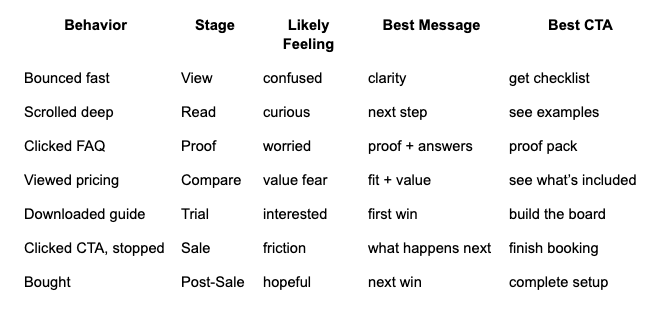
This is your simple retargeting plan.
🧲 Creative Ideas by Stage
View creative
“For…” line graphic
3-step checklist
simple pain statement
short explainer video
Read creative
blog-to-template ad
next-step guide
Behavior Board preview
“turn this into action” graphic
Proof creative
mini-case
quote card
FAQ answer
before/after copy example
Compare creative
fit guide
plan comparison
what’s included card
starter path graphic
Trial creative
48-hour win reminder
setup checklist
“next step” card
quick-start video
Sale creative
what happens next
final proof
guarantee mechanics
booking reminder
Post-sale creative
first-win checklist
onboarding reminder
upgrade path
referral prompt
Clarity beats fancy.
⏱️ Frequency and Timing Rules
Retargeting can help.
Or it can annoy people.
Use simple timing.
Suggested windows
View stage: 3–7 days
Read stage: 7–14 days
Proof stage: 7–21 days
Compare stage: 3–14 days
Trial stage: 3–10 days
Sale stage: 1–5 days
Post-sale: based on onboarding steps
Simple frequency caps
Cold/View: low frequency
Proof/Compare: medium frequency
Sale: short and focused
Post-sale: helpful, not pushy
Rule:
If the ad is not helping, it is noise.
🧪 Weekly Retargeting Tests
Do not rebuild everything.
Run one test per week.
Test 1: Clarity vs proof
Use for View/Read stage.
Test 2: Proof pack vs audit
Use for Proof stage.
Test 3: Pricing clarity vs starter path
Use for Compare stage.
Test 4: What happens next vs final proof
Use for Sale stage.
Test 5: Setup checklist vs upgrade offer
Use for Post-sale stage.
Track behavior by stage.
📊 KPIs That Prove Retargeting Is Working
Track:
retargeting CTR
repeat visits
CTA clicks
resource downloads
trial starts
booking completion
checkout completion
close rate
time-to-yes
refunds
repeat purchase
The best retargeting improves velocity.
That means buyers move faster from interest to action.
🧯 Common Retargeting Mistakes
Mistake 1: Same ad to everyone
Fix: segment by behavior.
Mistake 2: Selling too soon
Fix: show the next step, not the final step.
Mistake 3: No proof ads
Fix: use proof for readers, FAQ clickers, and pricing visitors.
Mistake 4: Ignoring abandoners
Fix: use friction-fix ads with what happens next.
Mistake 5: Too much frequency
Fix: cap impressions and shorten windows.
Mistake 6: No post-sale retargeting
Fix: help buyers get the first win after purchase.
👤 How Retargeting Updates Your Buyer Persona
Every retargeting stage teaches you something.
Add these fields to your buyer persona:
✅ Retargeting Persona Fields
First action: ____
Common drop-off: ____
Proof needed: ____
Best next CTA: ____
Biggest friction point: ____
Best first win: ____
Fastest path to yes: ____
Now the buyer persona can guide follow-up, not just first-touch copy.
❓ FAQ — Retargeting by Consumer Behavior and Buyer Persona
1) What is retargeting by consumer behavior?
Retargeting by consumer behavior means showing follow-up ads based on what buyers did, such as bouncing, reading, clicking FAQs, visiting pricing, starting a form, or buying.
2) How does buyer persona affect retargeting?
A buyer persona shows what the buyer wants, fears, and needs to trust. That tells you which retargeting message and CTA to use at each stage.
3) What are the main retargeting stages?
The main stages are view, read, proof, compare, trial, sale, and post-sale.
4) What should we show someone who bounced fast?
Show a clarity ad with a simple “For…” line and a small CTA like a checklist, guide, or short video.
5) What should we show someone who read a blog post?
Show the next useful step, such as a worksheet, example, proof pack, or related guide that helps them apply what they learned.
6) What should we show someone who clicked FAQs?
Show proof and risk-reducing content, such as real examples, mini-cases, micro-FAQs, and a safe CTA.
7) What should we show someone who visited pricing?
Show value and fit content: what’s included, who it is for, starter path, proof near pricing, and comparison help.
8) What should we show someone who downloaded a guide?
Show a first-win ad. Move them from guide to action with a 48-hour win, audit, checklist, or setup step.
9) What should we show someone who abandoned checkout?
Show what happens next, reduce friction, answer final doubts, and invite them to finish with a clear CTA.
10) Should we retarget buyers after purchase?
Yes. Post-sale retargeting can improve onboarding, reduce refunds, increase upgrades, and encourage referrals.
11) What KPIs prove retargeting is working?
Track retargeting CTR, repeat visits, CTA clicks, resource downloads, trial starts, checkout completion, close rate, and time-to-yes.
12) What is the biggest retargeting mistake?
The biggest mistake is showing the same “buy now” ad to everyone. Smart retargeting shows the next right step based on behavior.
📌 Key Takeaways
Retargeting should guide buyers, not chase them
Use consumer behavior to choose the next message
Build a ladder: view → read → proof → compare → trial → sale → post-sale
Match each stage with the right CTA and proof
Use buyer persona fears to decide what each ad should say
Track velocity, close rate, and quality—not just clicks
Show the next right step, not the biggest ask
This is buyer clarity inside The Buyer Clarity System™
🎁 Complimentary Ebook
Want the retargeting ladder map, stage-by-stage CTA guide, and buyer persona follow-up worksheet?
Grab our COMPLIMENTARY Buyer Clarity Guide here:
👉 Download your complimentary ebook now
🧭 Final Word
Retargeting should not feel like a pushy salesperson following buyers around the internet.
It should feel like a guide.
They viewed? Give clarity.
They read? Give the next step.
They need proof? Show proof.
They compare? Show fit.
They trial? Give a first win.
They are close? Remove fear.
Read consumer behavior. Match the buyer persona. Show the next right step.
That is how retargeting turns interest into action—inside The Buyer Clarity System™.
