🧩 How Many Segments Should We Start With? (3–5 Slices That Sell)
🧩 How Many Segments Should We Start With? (3–5 Slices That Sell)
Too many choices feels unsafe.
For buyers… and for business owners.
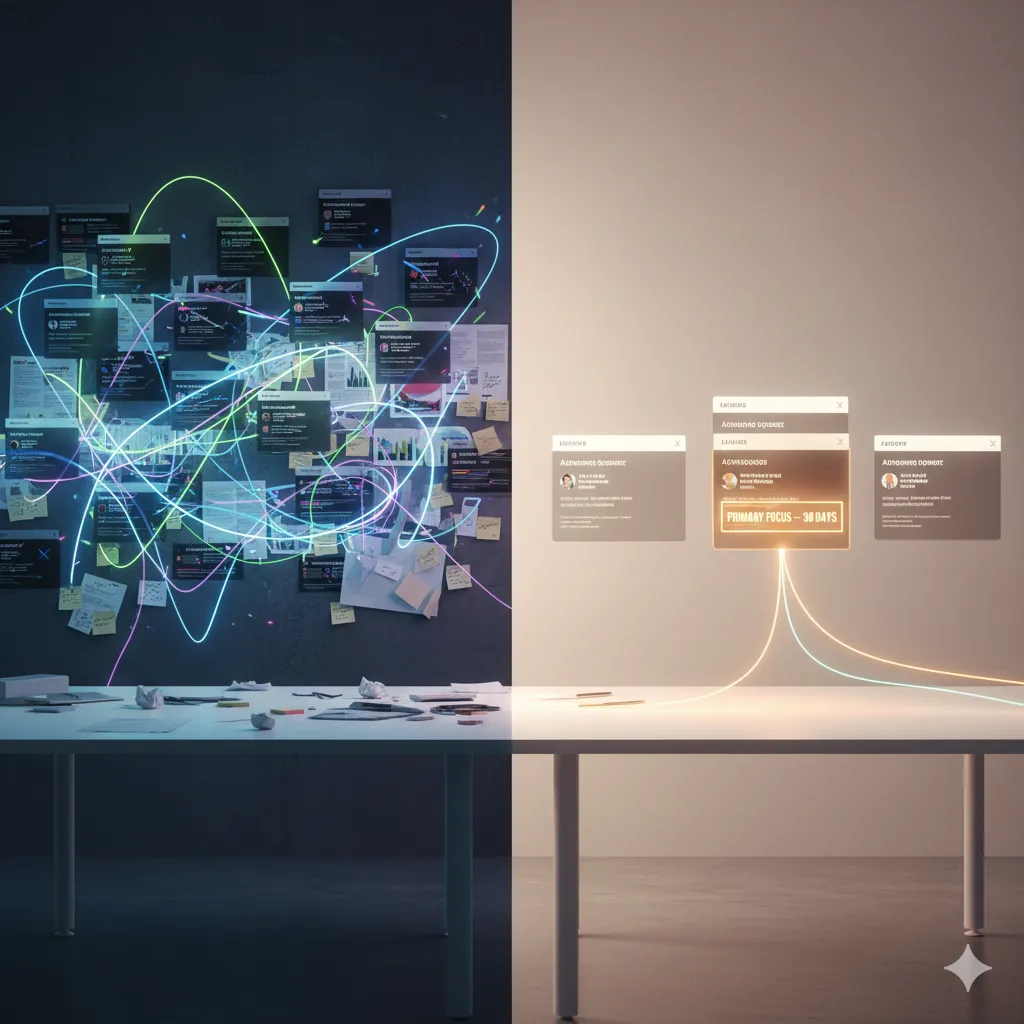
When we create 12 segments, we don’t feel “smart.” We feel stuck. We make 12 pages. 12 offers. 12 messages. Nothing gets finished. Nothing gets tested. And we never learn what our target audience truly wants.
This is why we start small. We use market segmentation to find 3–5 slices that sell. We follow real consumer behavior. We build a clear buyer persona. And we grow one win at a time inside The Buyer Clarity System™.
Start with 3 market segmentation slices. Pick 1 as your main target audience for 30 days. Add more slices later only after you have proof and patterns.
💡 Why starting with fewer market segmentation slices wins
Small businesses don’t need complexity. They need clarity.
Starting with fewer market segmentation slices helps because it:
Keeps your message sharp for your target audience
Makes your buyer persona easier to build (real words, real fears)
Lets you test faster using consumer behavior
Stops you from spreading your budget too thin
Makes your pages and ads feel calm and simple
Helps you build buyer clarity instead of chaos
Big companies can afford messy. Small businesses can’t.
🔎 What “a segment” means in market segmentation
A segment is just a small group of people who share something important.
A market segmentation slice might share:
the same pain
the same role
the same urgency
the same budget
the same past tries
the same stage (cold/warm/hot)
the same buying habits (consumer behavior)
Then we pick one slice as our target audience first.
One slice. One page. One offer. One CTA.
🧭 The safest starting point for market segmentation
Here’s the starting rule that saves time:
✅ Start with 3 market segmentation slices.
Why 3?
Because it’s enough to learn patterns…
but not so many that we freeze.
Then we choose one slice as our main target audience for the next 30 days.
After we get a win, we can expand to 4 or 5.
🧰 The scoring model for market segmentation (urgency, budget, reach, fit)
This is how we decide which slices deserve attention.
We score each market segmentation slice from 1 to 5 on:
⚡ Urgency (market segmentation)
How badly do they need help now?
1 = someday
3 = this month
5 = today
💳 Budget (market segmentation)
Can they pay for help?
1 = no budget
3 = starter budget
5 = strong budget
📍 Reach (market segmentation)
Can we find them easily?
1 = hard to find
3 = can find with effort
5 = easy to target today
🎯 Fit (market segmentation)
Do we solve their pain really well?
1 = weak fit
3 = decent fit
5 = perfect fit
Add the score.
The top slice becomes our first target audience.
This keeps market segmentation grounded in reality.
🧩 A simple market segmentation worksheet (copy this)
Make a list of possible slices. Then score them.
Market segmentation slice name:
Urgency: __ / 5
Budget: __ / 5
Reach: __ / 5
Fit: __ / 5
Total: __ / 20
Do this for 3–8 possible slices.
Then pick the top 3 slices to start.
🎯 Why we pick 1 target audience first (even if we have 3 slices)
This part is important.
We can have 3 slices…
but we still pick 1 main target audience at a time.
Why?
Because:
One message gets finished
One page gets built
One offer gets tested
One set of FAQs gets written
One proof stack gets tightened
Consumer behavior can clearly tell us “yes” or “no”
When we mix slices, the data lies.
When we focus, the data speaks.
That creates buyer clarity.
🧠 How consumer behavior tells us which slice is “hot”
Once we choose our first target audience, we watch:
CTR (do they care?)
time on page (do they trust?)
scroll to CTA (do they stay?)
CTA clicks (do they act?)
lead to call/trial (does the step fit?)
close rate (does the promise fit?)
refunds (was it the right fit?)
These are consumer behavior signals.
They show if our market segmentation slice is real.
🧱 The “3 slices” setup that works for almost any business
If we’re not sure what slices to start with, these are safe:
Pain slice (what hurts most)
Urgency slice (who needs it now)
Past tries slice (who is tired of failed fixes)
These three slices usually produce strong patterns fast.
🧩 Examples: market segmentation for service, SaaS, local, ecommerce
🛠️ Service business market segmentation example
Offer: marketing help for coaches
Possible slices:
New coach, no clients (high urgency, low budget)
Coach with clients, wants more (medium urgency, medium budget)
Burned-out coach, wants systems (high urgency, higher budget)
Score them.
Pick top 3.
Choose 1 target audience first.
Build one page. One CTA.
💻 SaaS market segmentation example
Offer: invoicing or payment tool
Possible slices:
Agencies with late pay (high urgency)
Freelancers who forget invoices (medium urgency)
Bigger firms who need compliance (lower reach, higher budget)
Score them.
Choose top slice as target audience.
Then write the buyer persona from real consumer behavior.
📍 Local business market segmentation example
Offer: gym or fitness studio
Possible slices:
Busy parents (high reach, high urgency at night)
New lifters (high reach, medium urgency)
Weight-loss restart folks (seasonal urgency)
Score them.
Pick 3.
Then choose one target audience and build:
a schedule-first page
proof by the button
“For/Not-for” box
🛒 Ecommerce market segmentation example
Offer: skincare
Possible slices:
Sensitive skin (high urgency, high fit)
Acne teens (high reach, medium budget)
Anti-aging shoppers (higher budget, lower urgency)
Score them.
Pick 3.
Choose one target audience.
Write one landing page that fits their fear.
➕ When to add more market segmentation slices (and when not to)
We add slices only after we have proof.
✅ Add a new market segmentation slice when:
One slice is winning and stable
You have enough proof for a second page
You can support a second offer and FAQ set
You know the buyer words for that slice
Your first slice has consistent leads
❌ Don’t add a slice when:
You haven’t finished your first page
You don’t have proof for your current slice
Your message still feels “generic”
Your target audience isn’t clear yet
You are still guessing instead of watching consumer behavior
Start small. Win. Then expand.
🧠 How market segmentation helps your buyer persona become real
A strong buyer persona is not a pretend character.
It’s a pattern from real words and actions.
Market segmentation gives the group.
Consumer behavior gives the proof.
The buyer persona becomes clear.
That’s when your marketing stops feeling hard.
❓ FAQ (AEO-Ready)
How many market segmentation slices should we start with?
Start with 3 market segmentation slices. Then pick one target audience to focus on for 30 days.
Why not start with 10 segments?
Too many segments slow you down. You end up with too many pages, too many messages, and no clear tests.
What is the best way to choose our first target audience?
Use the scoring model: urgency, budget, reach, and fit. The top-scoring slice becomes your first target audience.
How do we know if a market segmentation slice is working?
Watch consumer behavior signals like CTR, time on page, CTA clicks, lead-to-call, close rate, and refunds.
When should we add a fourth or fifth segment?
Add more market segmentation slices only after your first slice is stable and you have proof, content, and time to support another page.
What if we’re not sure what slices to start with?
Start with pain, urgency, and past tries. These are the fastest slices to reveal real target audience patterns.
Does market segmentation help our buyer persona?
Yes. Market segmentation picks the group, and real buyer words turn it into a clear buyer persona.
Should each segment have its own page?
Yes. One slice needs one page, one offer, one CTA, and slice-specific FAQs.
How often should we review market segmentation?
Do a light review every 90 days and a deeper refresh every 6–12 months, based on changes in consumer behavior.
What is the biggest mistake with market segmentation?
Trying to sell to everyone with one message. It creates confusion, and confused people don’t buy.
📌 Key Takeaways
Start with 3 market segmentation slices
Choose one target audience first for 30 days
Score slices by urgency, budget, reach, and fit
Let consumer behavior choose winners
Add slices only after proof and stability
One slice = one page = one CTA
Market segmentation makes your buyer persona real
This builds buyer clarity inside The Buyer Clarity System™
🎁 Complimentary Ebook
Want the scorecard and worksheet in one place? Grab our COMPLIMENTARY Buyer Clarity Guide here:
👉Download your complimentary ebook now
🧭 Final Word
Start small. Aim sharp. Win fast.
Three market segmentation slices are enough to learn the truth.
Pick one target audience, follow real consumer behavior, and build a buyer persona that feels real.
That’s how we grow with calm confidence—inside The Buyer Clarity System™.
