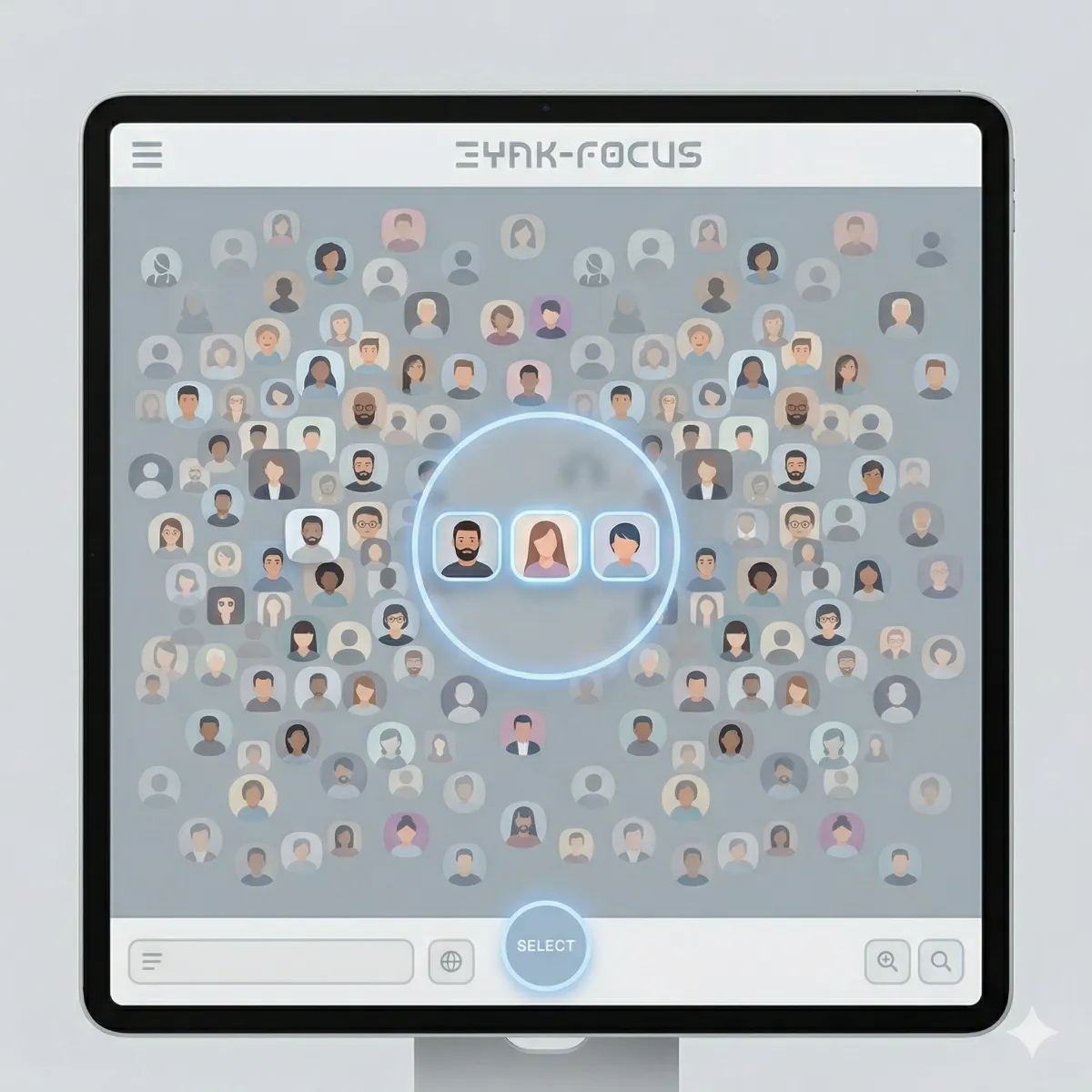
🧭 How Many Buyer Personas Per Target Audience? Start Smart, Not Wide
🧭 How Many Buyer Personas Per Target Audience? Start Smart, Not Wide
When we pick one target audience, it feels like we should build a bunch of buyer persona profiles right away.
But here’s what happens when we do that:
We split our message.
We split our proof.
We split our pages.
We split our attention.
And then nothing feels clear.
That is the opposite of buyer clarity.
So the real question is not “How many can we make?”
The real question is:
How many buyer personas do we need per target audience to sell now?
This post helps us answer that with a simple scoring model, real consumer behavior signals, and a calm rule we use inside The Buyer Clarity System™.
For one target audience, start with 1 primary buyer persona. If needed, add up to 3 core personas max. Only add a persona when behavior data proves the current persona cannot cover that slice.
🧠 Simple definitions (so we don’t mix it up)
🎯 Target audience (the group)
Our target audience is the group we choose to aim at.
Example:
“Busy parents who want short workouts.”
👤 Buyer persona (the one person story)
Our buyer persona is the “one person” inside that group with:
pain, dream, trigger, doubts, and proof needed.
Example:
“A busy mom who fears failing again and needs a fast first win.”
One target audience can have more than one persona.
But we don’t start wide.
💡 Why too many buyer personas per target audience hurts conversion
When we try to speak to 5 personas at once:
the headline gets generic
the proof feels mismatched
the FAQ becomes a mess
the CTA becomes unclear
ads get broad
tests get muddy
Then our consumer behavior signals get worse:
CTR drops
bounce rises
CTA clicks stall
conversions slow
Clarity wins. Spread loses.
✅ The safe rule: 1–3 buyer personas per target audience (max)
Here’s the simple rule we follow:
🧭 Start with 1 primary buyer persona
One persona. One page. One CTA. One offer path.
🧩 Add a second persona only when needed
Only when the first persona can’t cover a real slice.
🧱 Stop at 3 core personas max
Most businesses do best with 1–3 personas per target audience.
If we have more than 3, we usually need better segmentation or a different target audience choice.
🧠 What counts as a “new persona” (not just a small difference)
A new buyer persona is needed when the slice has a different:
main pain
main “why now” trigger
proof needed
buying speed (velocity)
stage (cold vs warm vs hot)
budget level (starter vs pro vs urgent)
If those are the same, it’s not a new persona.
It’s just a variation.
🧭 The 3 core persona types that show up inside one target audience
Most target audiences break into 3 common persona types:
⚡ Persona type: Urgent buyer
wants a fast fix
asks “how soon?”
pays for speed
🧾 Persona type: Proof-seeker
wants examples and certainty
asks “will this work for me?”
needs like-me proof near the CTA
🧩 Persona type: Starter buyer
cautious and low risk
needs a small first step
responds best to guides/checklists
Often, those 3 cover the whole target audience.
🧮 The scoring model to pick your primary buyer persona
We pick the primary persona the same way we pick good targets:
Score each persona 1–5 on:
Urgency (need now?)
Budget (can pay?)
Fit (are we best for them?)
Reach (can we find them easily?)
Retention (do they stay and refer?)
Add the score.
The top score becomes your primary buyer persona.
🧾 Simple scoring worksheet (copy/paste)
For each persona inside the target audience:
Persona name: ______
Urgency (1–5): ____
Budget (1–5): ____
Fit (1–5): ____
Reach (1–5): ____
Retention (1–5): ____
Total (max 25): ____
Pick the top one first.
🧠 How consumer behavior confirms the best buyer persona
After we choose a primary persona, we validate it with behavior:
CTR (do they care?)
time on page (do they trust?)
bounce rate (did we match expectations?)
CTA clicks (does the step feel safe?)
conversion rate (did they act?)
close rate (are they the right buyers?)
refunds/churn (did we set the right promise?)
velocity (how fast do they decide?)
This is how we stop guessing.
🧱 Start with one persona page (one slice, one CTA)
This is the winning setup:
one page
one “For…” line
one persona mirror message
proof by the button
3-step path with time tags
micro-FAQs under CTA
one CTA
This gives clean data and fast wins.
➕ When to add a second buyer persona (clear triggers)
Add a second persona only when:
you keep hearing a new pain
you keep seeing new objections
a group converts poorly but shows strong interest
sales calls keep saying “we’re different because…”
refunds show expectation mismatch
you have enough proof to serve the new persona
If you don’t see these, don’t add.
➖ When to retire a buyer persona (yes, retire)
Retire a persona when:
it costs too much to reach
it converts poorly for 3 cycles
it refunds or churns more
it needs proof you don’t have
it pulls your message away from your best buyers
Not every persona deserves your time.
🧩 How to keep 3 personas from turning into chaos
If you have 2–3 personas, keep it clean:
one page per persona
one CTA per page
one proof stack per persona
one FAQ set per persona
separate traffic and separate tracking
If we mix persona traffic, we lose the truth.
🛠️ Examples: 1 target audience, 3 buyer personas
Example: “Busy parents” target audience
Persona 1 (starter): “I’m new and unsure.”
Persona 2 (proof-seeker): “I’ve failed before.”
Persona 3 (urgent): “I need a change now.”
Three different fears. Three different CTAs. Still one target audience.
Example: “Ops leads” target audience
Persona 1 (urgent): month-end chaos
Persona 2 (proof-seeker): needs integrations proof
Persona 3 (starter): small team wants simple setup
🧪 Tiny tests to choose the winning persona first
If you’re unsure which persona is primary, run small tests:
2 “For…” lines (same target audience, different persona angle)
2 CTAs (guide vs trial)
2 proof blocks (like-me proof vs steps proof)
One week per test. One change only.
❓ FAQ — Buyer Personas Per Target Audience
1) How many buyer personas should we use for one target audience?
Start with 1 primary buyer persona. Add only if needed, and keep it to 1–3 core personas max.
2) Why not build 5 buyer personas right away?
It spreads our message thin. Pages get generic, proof gets weak, and consumer behavior signals get worse.
3) What makes a new buyer persona “different enough”?
A new persona needs a different pain, trigger, proof needed, or buying speed. Small variations don’t need a new persona.
4) How do we pick the primary buyer persona?
Score personas by urgency, budget, fit, reach, and retention. Then validate with consumer behavior KPIs.
5) What consumer behavior KPIs help us validate a persona?
CTR, time on page, bounce, CTA clicks, conversion rate, close rate, refunds, and velocity.
6) When should we add a second buyer persona?
When we see repeated new pains, new objections, or consistent mismatch signals that the current persona can’t cover.
7) Should each buyer persona have its own page?
Yes. One persona per page keeps the message and CTA clear and gives clean tracking.
8) What if our target audience has different budgets?
That can be a reason for a second persona (starter vs urgent). But keep the total to 1–3 personas max.
9) How do we stop multiple personas from creating chaos?
Separate pages, separate offers, separate FAQs, and separate tracking. Don’t blend persona traffic.
10) When should we retire a buyer persona?
Retire it when it costs too much to reach, converts poorly, churns/refunds more, or pulls focus from your best buyers.
11) Can market segmentation reduce the number of buyer personas?
Yes. Better market segmentation often lets one strong persona cover more ground without becoming generic.
12) What’s the safest first step if we’re unsure?
Build one persona page first, run a small test for one week, and let consumer behavior choose the winner.
📌 Key Takeaways
For one target audience, start with 1 primary buyer persona
Keep it to 1–3 core personas max
Choose primary persona using urgency/budget/fit/reach/retention scoring
Validate with consumer behavior KPIs (CTR, bounce, clicks, conversions, velocity)
Add personas only when behavior proves you need them
Retire personas that drain budget and focus
Keep one persona per page with one CTA
This is buyer clarity inside The Buyer Clarity System™
🎁 Complimentary Ebook
Want the persona scoring sheet and the “one persona per page” template?
Grab our COMPLIMENTARY Buyer Clarity Guide here:
👉 Download your complimentary ebook now
🧭 Final Word
Wide feels busy. Focus feels profitable.
Pick one target audience. Start with one buyer persona. Win once. Then expand with proof.
That’s how we grow fast without getting messy—inside The Buyer Clarity System™.
