🎯 Write a Homepage That Speaks to One Target Audience (Layout + Copy)
🎯 Write a Homepage That Speaks to One Target Audience (Layout + Copy)
Safe. Seen. Sure.
That’s what people want.
A homepage that tries to talk to everyone helps no one. We pick one target audience, use their words, and show one safe next step. We let consumer behavior guide the page. We keep the promise small and clear. That’s how we build homepages inside The Buyer Clarity System™—and why they convert.
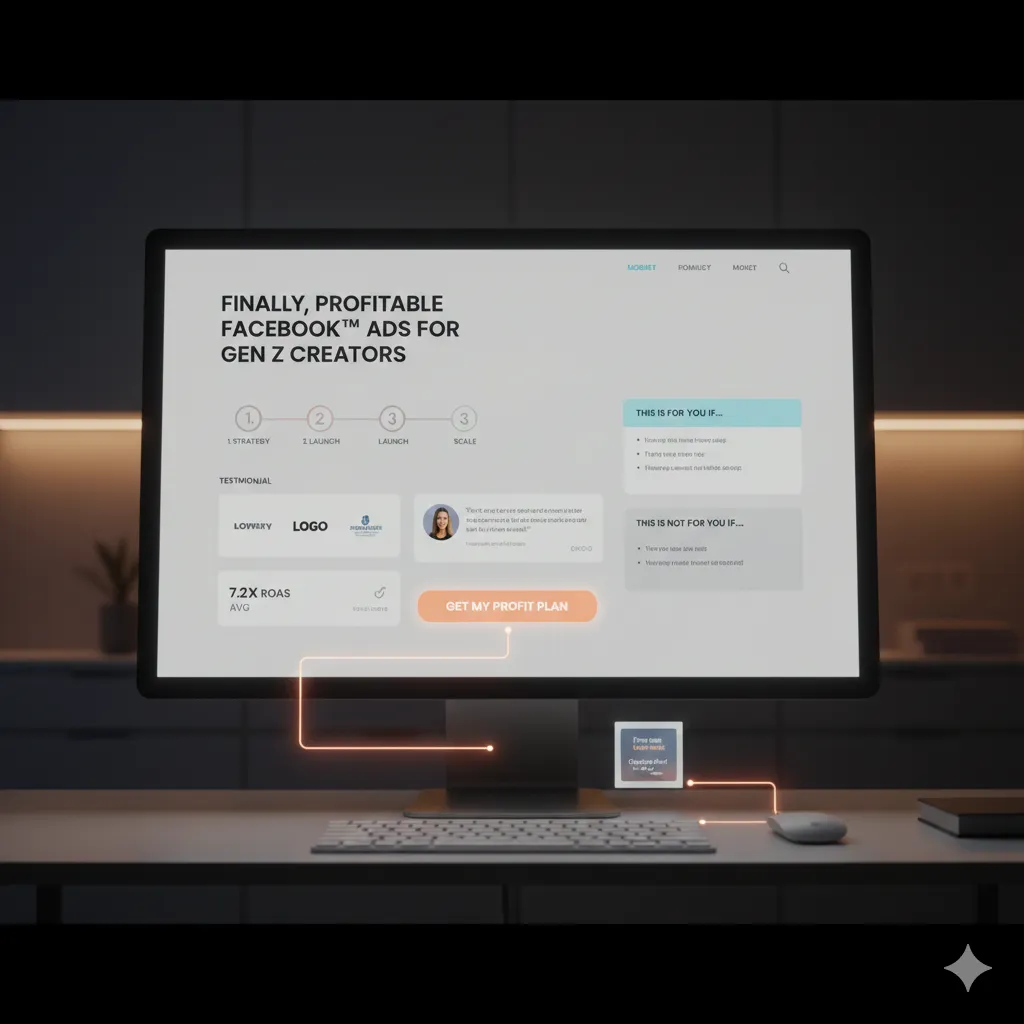
One homepage. One promise. One person. One button. Write in target audience words. Add a proof stack, a 3-step path, and a simple “For/Not-for” box. End with a footer CTA and a complimentary guide. Use this layout and copy below.
💡 Why a One-Target-Audience Homepage Wins (And Guessing Fails)
When we aim at one target audience, buyers feel seen. Fear drops.
When we aim at “everyone,” trust dies. Costs go up.
One target audience sharpens your promise and proof.
It tightens your buyer persona (pain, dream, risk, words).
It makes market segmentation real (one slice at a time).
It uses consumer behavior to set a safe next step.
It creates buyer clarity—fast wins and calm growth.
Small focus → big lift.
🧱 Layout Overview for a One Target Audience Homepage (Wireframe You Can Copy)
Build these blocks in order. Keep the page short, clean, and fast.
Hero: one-line promise in target audience words
Subhead: short support line that names pain + path
Primary CTA: one button (same label site-wide)
Proof Stack: like-me proof near the button
3-Step Path: simple steps with time tags
“For / Not-for”: filter fast and build trust
Micro-FAQ: top 4–6 doubts under CTAs
Secondary CTA: complimentary guide for cold readers
Footer CTA: repeat button + guide link
Every block must serve one target audience. Nothing extra.
🦸 Hero Block That Mirrors Your One Target Audience (Copy Template)
Goal: In 5 seconds, your target audience should nod “This is for me.”
Hero Line (use buyer words):
For [role] who want [result] without [pain] in [time].
Examples (target audience ready):
For ops leads who want on-time payments without awkward chasing in 7 days.
For busy moms who want calm skin without harsh stuff in 7 nights.
For new coaches who want paid calls without pushy sales in 1 week.
Subhead (target audience support line):
Simple path. Fast first win. We set it up with you.
Primary CTA (target audience):
“Start your 7-day plan”
“See how it works”
“Start free setup”
Keep one button label across the page. One target audience, one CTА.
✅ Proof Stack That Calms Your Target Audience (Place It by the Button)
Why: Trust rises at the click, not in the footer. Put proof right by your target audience CTA.
Proof items (target audience-friendly):
“Like me” mini-case (same role, same pain, quick win)
Star rating or short quote (10–15 words)
Trust logos (tools, partners)
Tiny stat (hours saved, time to first win)
Copy example (target audience):
“Ops team cut chasing time by 4 hours/week in 7 days.”
★★★★☆ “Invoices paid faster. Setup was easy.”
Works with: Xero • QuickBooks • Stripe
All proof speaks to the one target audience.
3️⃣ The 3-Step Path for Your One Target Audience (Make It Feel Easy)
Why: Brains love simple paths. Your target audience fears “too hard.”
Layout (target audience with time tags):
Step 1 (5 min): Connect your tools
Step 2 (10 min): Pick your rules
Step 3 (15 min): Turn it on and track your win
Copy pattern (target audience):
“Three steps. We set it up with you. First win in 48 hours.”
Time tags = “I can do this.” For your target audience, that’s gold.
🧭 “For / Not-for” Box That Filters Fast for a Target Audience (Trust Builder)
Why: Saying who it’s not for makes the right target audience relax.
For (target audience):
Teams who want a fast first win
People who can give 15–30 minutes this week
Buyers who value clear steps and simple tools
Not for (target audience):
Folks who want a complex custom build now
Shoppers who won’t try a small step first
Teams who don’t have the problem we solve
This saves time and raises trust with your target audience.
❓ Micro-FAQ for a Target Audience (Put It Under the Button)
Answer what your target audience asks before clicking:
“Will this work for [role]?”
“How long until results?”
“What about my tool stack?”
“Is there support if I get stuck?”
“What happens in week one?”
“Can I cancel or change later?”
Micro-answers (target audience, 1–2 lines):
Yes—built for [role], we set it up with you.
Most see a win in 48 hours.
Works with X, Y, Z.
Chat + email + short calls.
You connect, we set rules, we launch with you.
Simple plan. No long lock-in.
Your target audience should feel safe at the click.
✍️ Copy Templates for a One Target Audience Homepage (Steal These)
Headline (target audience):
“Stop [pain] and get [result] in [time]—without [hated thing].”
Subhead (target audience):
“Simple steps. Fast win. We set it up with you.”
CTA (target audience):
“Start your 7-day plan” · “See how it works” · “Start free setup”
Proof line (target audience):
“[Role] cut [pain] in [time]. See how.”
First-win line (target audience):
“Get your first win in 48 hours.”
Use exact phrases from buyer reviews and support chats.
🔎 Voice of Customer for a Target Audience (How to Get the Words)
We don’t guess. We listen to consumer behavior and copy buyer words:
Reviews (yours + rivals) → “like me” phrases
Support chats → “why now,” “what scares me”
On-site search → what your target audience can’t find
Refund notes → fix promise or fit
Ad comments → raw pain and doubt
These write your homepage for your target audience.
🧪 A/B Tests That Move the Needle for a Target Audience (One per Week)
Pick one link in the chain. Test one thing.
Hook (target audience): pain-first vs. proof-first
Hero layout (target audience): steps-first vs. proof-first under hero
CTA (target audience): “Start now” vs. “See how it works”
Proof (target audience): case A vs. case B (same role)
Offer (target audience): trial vs. mini workshop vs. complimentary guide
FAQ (target audience): reorder by top doubt
Rule: one change, one week, one winner. Let consumer behavior vote.
📊 KPIs That Prove Your One Target Audience Homepage Works
Track per target audience slice (not blended):
CTR from ads/emails → hook fit for target audience
Time on page → message fit
Scroll to CTA % → layout fit
CTA clicks → action fit
Lead → call % or trial start % → step fit
Call → close % → promise fit
Refunds / churn → expectation fit
Time-to-Yes → how fast from click to win
Fix the first red number. Then move down.
🧱 Example Homepage (Filled for One Target Audience)
Target audience: ops lead at a small agency (late payments)
Hero (target audience):
For ops leads who want on-time payments without awkward chasing in 7 days.
Subhead (target audience):
We connect your tools, set the rules, and turn it on with you.
CTA (target audience):
Start your 7-day plan
Proof stack (target audience):
“Cut chasing time by 4 hours/week in one week.”
★★★★☆ “Setup was easy. Clients pay faster.”
Works with: Xero • QuickBooks • Stripe
3 steps (target audience):
Connect tools (5 min)
Pick rules (10 min)
Turn it on (15 min)
For / Not-for (target audience):
For: teams with late pay, want a fast win
Not-for: custom builds, no invoice issue
Micro-FAQ (target audience):
Will this work for ops? Yes—built for ops and finance.
How fast? Most see a win in 48 hours.
What if I get stuck? Chat + short calls.
CTA: Start your 7-day plan
Footer CTA + guide (target audience):
Not ready? Get the complimentary guide: “7 Steps to On-Time Pay.”
This is short, clear, and safe for the target audience.
🧰 Do / Don’t Checklist for a One Target Audience Homepage
Do (target audience):
One promise, one person, one button
Use buyer words from consumer behavior
Put proof by the button
Show a 3-step path with time tags
Add “For / Not-for”
Offer a complimentary guide for cold readers
Test one change per week
Don’t (target audience):
Talk to everyone
Pack five offers on the hero
Hide proof at the bottom
Make the first step big and scary
Ask for long forms on mobile
Skip weekly review
This keeps your target audience page honest and strong.
🧭 Footer CTA + Complimentary Guide for a Target Audience (Copy Block)
Footer CTA (target audience):
Ready for on-time pay? Start your 7-day plan.
Guide (target audience):
Not ready yet? Get the complimentary guide and see the steps.
👉 Download your complimentary ebook
Use the same two CTAs across the page for your target audience.
❓ FAQ: One Target Audience Homepage
How many offers should be on a homepage for one target audience?
One. One promise, one person, one button. Use a small secondary CTA (complimentary guide) for colder target audience readers.
Where should proof go on a page for a target audience?
Near the button. Your target audience needs trust at the click, not in the footer.
Do we need a 3-step path for a target audience?
Yes. Steps with time tags calm fear and make action feel easy for your target audience.
What if we have more than one target audience?
Build separate pages. One homepage per target audience slice or run a clear navigation split above the fold.
How do we get the right words for a target audience?
Use consumer behavior: reviews, support chats, on-site search, ad comments. Copy exact phrases into your homepage.
What should the main CTA say for a target audience?
Keep it simple and safe: “Start your 7-day plan,” “See how it works,” or “Start free setup.” Use one label across the page for one target audience.
How often should we update the homepage for a target audience?
Review weekly, refresh quarterly, or when KPIs dip. Let consumer behavior guide changes.
What metrics matter most for a target audience homepage?
CTR, time on page, scroll to CTA %, CTA clicks, lead→call or trial starts, call→close, refunds, time-to-Yes—tracked for your target audience slice.
Can we put pricing on a one target audience homepage?
Yes if your target audience is warm/hot. If they’re cold, link to pricing after proof and path.
What if we sell B2B and B2C to one target audience?
Use market segmentation. Build separate pages and proof stacks. Update the buyer persona for each target audience.
📌 Key Takeaways: One Target Audience Homepage
One promise, one person, one button for your target audience
Use buyer words from consumer behavior
Put proof by the button
Show a 3-step path with time tags
Add “For / Not-for” to filter fast
Offer a complimentary guide for cold target audience readers
Test one change each week
Track simple KPIs per target audience slice
This is buyer clarity—inside The Buyer Clarity System™
🎁 Complimentary Ebook for Your Target Audience
Want templates and scripts from this guide?
Grab our COMPLIMENTARY Buyer Clarity Guide and learn how to:
Write a homepage for one target audience
Use buyer persona and market segmentation to aim
Read consumer behavior to choose proof and steps
Run tiny tests that stack wins each week
👉 Download your complimentary ebook now
🧭 Final Word: A Homepage Built for One Target Audience
Right people. Right promise. Right button.
Speak to one target audience, in their words. Show proof by the click. Give a small, safe step and a fast win. Review weekly. Grow steady.
That’s the calm, clear path we follow—inside The Buyer Clarity System™.
