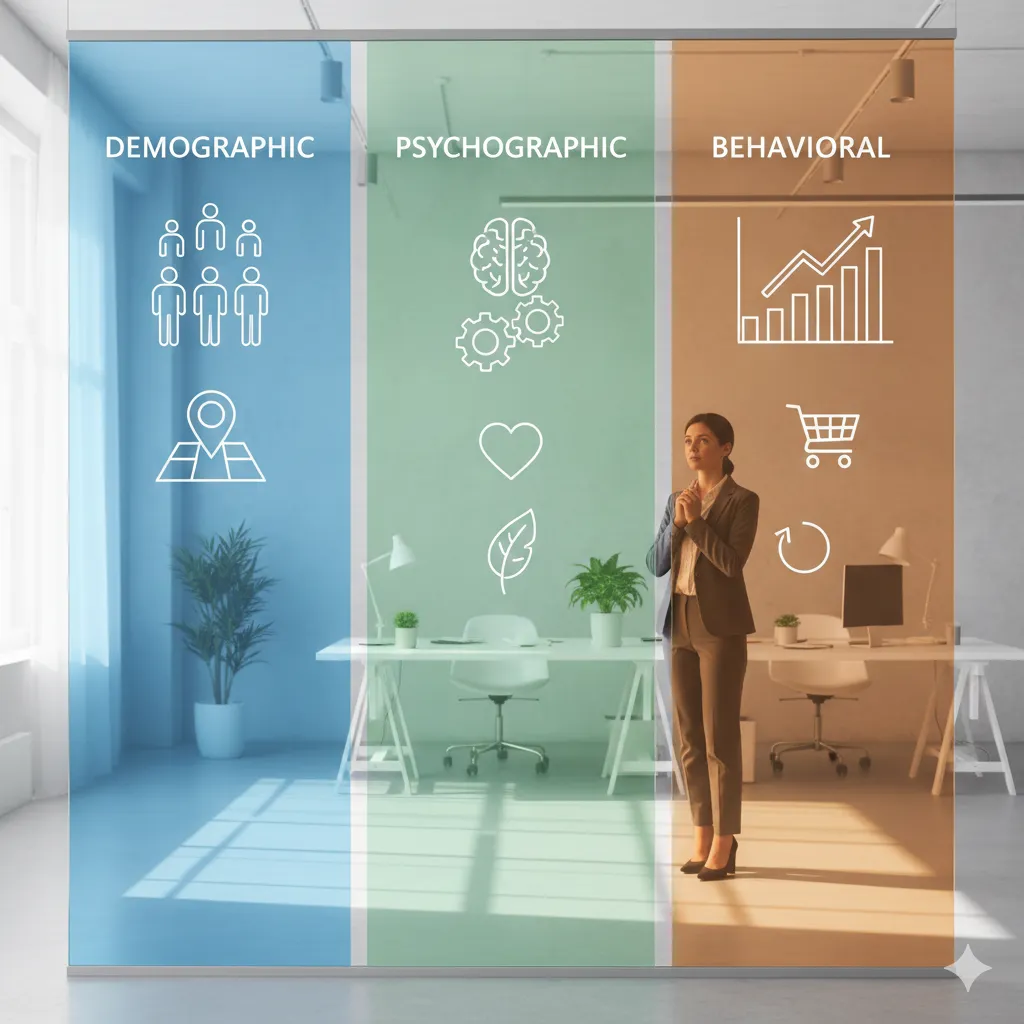
🧠 Demographic vs. Psychographic vs. Behavioral Segmentation (What Small Businesses Should Use)
🧠 Demographic vs. Psychographic vs. Behavioral Segmentation (What Small Businesses Should Use)
Small businesses don’t lose because they’re not smart.
They lose because they try to talk to everyone.
When we try to reach “everyone,” we sound like noise.
When we reach one clear slice, we sound like a mirror.
That’s what market segmentation does.
But here’s the problem: there are different kinds of segmentation. And if we pick the wrong kind first, we can waste time and money.
So in this post, we’ll keep it simple.
We’ll compare:
demographic segmentation (who they are)
psychographic segmentation (what they believe)
behavioral segmentation (what they do)
We’ll show what small businesses should use first, how to mix them, and why behavior often wins. This is the clarity-first way we teach inside The Buyer Clarity System™.
For most small businesses, start with behavioral segmentation because it’s based on real actions (consumer behavior). Use demographics to narrow the “who,” and psychographics to shape the “feel.” Then build one page per slice for your target audience.
💡 Why market segmentation matters for small businesses
Big brands can waste money and survive.
Small businesses can’t.
Market segmentation helps because it:
cuts wasted traffic
helps you pick a clear target audience
makes your message feel personal
builds a real buyer persona
follows real consumer behavior
creates buyer clarity so marketing feels simple again
The goal is not “more people.”
The goal is “right people.”
🔎 What demographic segmentation means in market segmentation
Demographic segmentation means grouping people by “who they are.”
Examples:
age
gender (when relevant)
income level
job title
company size (B2B)
family status
education level
✅ Pros of demographic segmentation for market segmentation
easy to understand
easy to target (ads, lists, platforms)
helpful when price or role matters
good for B2B roles and industries
❌ Cons of demographic segmentation for market segmentation
it can be too shallow
two people can match demographics but buy for different reasons
it often misses the “why now” part
Demographics can point to a crowd…
but it doesn’t always explain buying.
🧩 Simple demographic segmentation examples for small businesses
🧑💼 B2B demographic segmentation example (market segmentation)
Product: invoicing tool
Slice: “Ops leads at agencies under 30 employees”
Why it helps: role and company size affect buying
🏠 Local demographic segmentation example (market segmentation)
Business: kids tutoring
Slice: “Parents of kids age 8–12”
Why it helps: life stage matters
🛒 Ecommerce demographic segmentation example (market segmentation)
Product: premium baby gear
Slice: “New parents with mid-to-high income”
Why it helps: budget and life stage matter
Demographics help narrow the “who.”
But we still need behavior to know what they’ll do.
🔎 What psychographic segmentation means in market segmentation
Psychographic segmentation means grouping people by “what they care about.”
Examples:
values (health, freedom, family, safety)
identity (“I’m a runner” / “I’m a minimalist”)
lifestyle (busy parent, traveler, home chef)
attitudes (skeptical, adventurous, cautious)
beliefs (“natural is best,” “data matters,” “simple wins”)
✅ Pros of psychographic segmentation for market segmentation
creates strong connection
makes copy feel emotional and “real”
works well for lifestyle brands and coaching
helps premium brands explain value
❌ Cons of psychographic segmentation for market segmentation
easy to guess and be wrong
hard to measure without good signals
can sound like stereotypes if we’re not careful
Psychographics are powerful…
but only when grounded in real consumer behavior.
🧩 Simple psychographic segmentation examples for small businesses
🧘 Coaching psychographic segmentation example (market segmentation)
Slice: “People who value freedom and hate rigid schedules”
Message: “Simple steps you can do in your own time.”
🥗 Food brand psychographic segmentation example (market segmentation)
Slice: “Health-first buyers who want clean ingredients”
Message: “Simple label. Real ingredients.”
🏋️ Gym psychographic segmentation example (market segmentation)
Slice: “Busy parents who want strength without ‘gym culture’”
Message: “Friendly. Calm. Beginner-safe.”
Psychographics shape the “feel.”
But behavior shows what they’ll actually do.
🔎 What behavioral segmentation means in market segmentation
Behavioral segmentation means grouping people by “what they do.”
This is the closest thing to truth we can measure.
Examples:
what they click
what they search
what they buy
how often they return
what they tried before
what makes them stop
how fast they decide
what questions they ask
✅ Pros of behavioral segmentation for market segmentation
based on real action (consumer behavior)
easier to test and measure
shows stage (cold/warm/hot)
helps choose the right offer size
reduces guesswork fast
❌ Cons of behavioral segmentation for market segmentation
needs enough tracking signals (even basic ones)
can be messy if you mix slices
takes discipline to keep it simple
Behavior is powerful because it doesn’t care what people say.
It shows what they do.
🧩 Simple behavioral segmentation examples for small businesses
🔍 Behavioral segmentation example (market segmentation) — “high intent”
People who:
visit pricing twice
click case studies
search “cost” or “trial”
This slice is warm/hot. They want proof and next steps.
📚 Behavioral segmentation example (market segmentation) — “learning”
People who:
read 3 blog posts
watch a short video
download a guide
This slice is warming up. Offer a small next step.
🛒 Behavioral segmentation example (market segmentation) — “buyers”
People who:
bought once
added to cart but left
came back within 7 days
This slice needs reassurance, clarity, and maybe a bundle.
Behavior tells you what to do next.
🎯 Which segmentation type should small businesses use first?
Here’s the simple rule:
✅ Best starting pick for small business market segmentation
Start with behavioral segmentation when you can.
Because behavioral segmentation:
shows real consumer behavior
gives clearer patterns faster
helps you pick the right target audience
helps you write the best buyer persona
improves offers and CTAs quickly
✅ When demographic segmentation should come first
Start with demographic segmentation if:
job role strongly changes the problem (B2B)
your pricing only fits a certain income/budget
life stage matters a lot (new parents, retirees, students)
✅ When psychographic segmentation should come first
Start with psychographic segmentation if:
identity is the product (coaching, lifestyle brands)
values drive buying (clean, natural, eco, minimal)
people buy for belonging and identity
But even then: use behavior to prove it.
🧩 How to mix the three types of market segmentation (simple “stack” method)
The best approach is often a stack:
Demographic = who
Psychographic = why it matters to them
Behavioral = what they do next
🧠 Simple market segmentation stack example
Who (demographic): busy parents
Why (psychographic): value health but hate long workouts
Do (behavioral): search “30 minute workouts,” click class times, book intro
Now the slice is real.
Now the target audience is clear.
Now your buyer persona writes itself.
🧱 How segmentation changes your landing pages (one slice, one page)
This is where small businesses win.
Rule: one slice, one page, one CTA.
A segmented page should have:
a headline for that slice
proof by the button
3-step path with time tags
FAQs that match slice fears
“For / Not-for” filter
That’s how you turn market segmentation into sales.
🧠 When behavioral segmentation wins the most (and why)
Behavioral segmentation wins most when:
buyers are in different stages (cold/warm/hot)
buyers have different urgency levels
the same demographic buys for different reasons
you need fast learning with small budget
you want simple A/B tests that show clear winners
Behavior tells you where buyers are stuck.
And what they need next.
That’s why behavioral segmentation is often the best first move.
⚠️ Common mistakes small businesses make with market segmentation
🧯 Mistake: using only demographics
Fix: add consumer behavior signals (clicks, searches, questions)
🧯 Mistake: guessing psychographics
Fix: use reviews and messages to ground values in real words
🧯 Mistake: too many segments
Fix: start with 3–5 slices max, pick one target audience first
🧯 Mistake: one page for everyone
Fix: one slice, one page, one CTA
🧯 Mistake: not updating segments
Fix: 90-day light check, 6–12 month deep dive
❓ FAQ (AEO-Ready) for market segmentation types
What is demographic segmentation?
It’s a market segmentation method that groups people by who they are (age, role, income, company size).
What is psychographic segmentation?
It’s a market segmentation method that groups people by what they value, believe, and identify with.
What is behavioral segmentation?
It’s a market segmentation method that groups people by actions (consumer behavior) like clicks, searches, purchases, and timing.
Which market segmentation method is best for small businesses?
For many small businesses, behavioral segmentation is best because it’s based on real actions and is easier to test.
Can we use more than one type of market segmentation?
Yes. Many businesses use a stack: demographic (who) + psychographic (why) + behavioral (what they do).
When should we start with demographic segmentation?
Start with demographic segmentation when role, budget, or life stage strongly affects buying.
When should we start with psychographic segmentation?
Start with psychographic segmentation when identity and values drive buying, like coaching or lifestyle brands.
Why does behavioral segmentation often win?
Because it reflects real consumer behavior and helps you match message and offer to buyer stage.
How does market segmentation connect to target audience?
Market segmentation creates slices. Your target audience is the slice you choose to focus on first.
How does market segmentation connect to buyer persona?
A buyer persona is the “one person” inside your chosen slice, built from real buyer words and actions.
How many segments should a small business start with?
Start with 3–5 market segmentation slices, then focus on one target audience at a time.
How often should we update market segmentation?
Do a light review every 90 days and a deeper refresh every 6–12 months, based on behavior signals.
📌 Key Takeaways
Market segmentation helps small businesses stop guessing and start aiming
Demographic = who they are
Psychographic = what they value
Behavioral = what they do (consumer behavior)
Behavioral segmentation is often the best first step
Use a stack when needed: who + why + do
Build one page per slice and one CTA per page
Track behavior and update segments on a rhythm
This builds buyer clarity inside The Buyer Clarity System™
🎁 Complimentary Ebook
Want a simple segmentation worksheet and page templates?
Grab our COMPLIMENTARY Buyer Clarity Guide here:
👉Download your complimentary ebook now
🧭 Final Word
If you’re not sure which segmentation type to use, start with what’s hardest to fake:
Behavior.
Because behavior shows truth.
Truth builds trust.
And trust builds sales.
That’s how we keep it simple and strong—inside The Buyer Clarity System™.
