🔗 Ad-to-Landing Match: Use Buyer Persona Words So Clicks Don’t Bounce
🔗 Ad-to-Landing Match: Use Buyer Persona Words So Clicks Don’t Bounce
Clicks are not the win.
Clicks are the knock on the door.
The real win is what happens after the click.
Do they stay?
Do they read?
Do they trust?
Do they click the button?
Do they book?
Do they buy?
If people click your ad and bounce from your landing page, the first thing to check is not your budget.
It is not always the platform.
It is not always the offer.
It is not always the design.
The first thing to check is ad-to-landing match.
That means:
Does the landing page say what the ad promised?
And more than that:
Does the page use the same buyer persona words the ad used to get the click?
Because when the ad says one thing and the page says another, the buyer’s brain gets nervous.
They think:
“Wait… is this the right place?”
Then they leave.
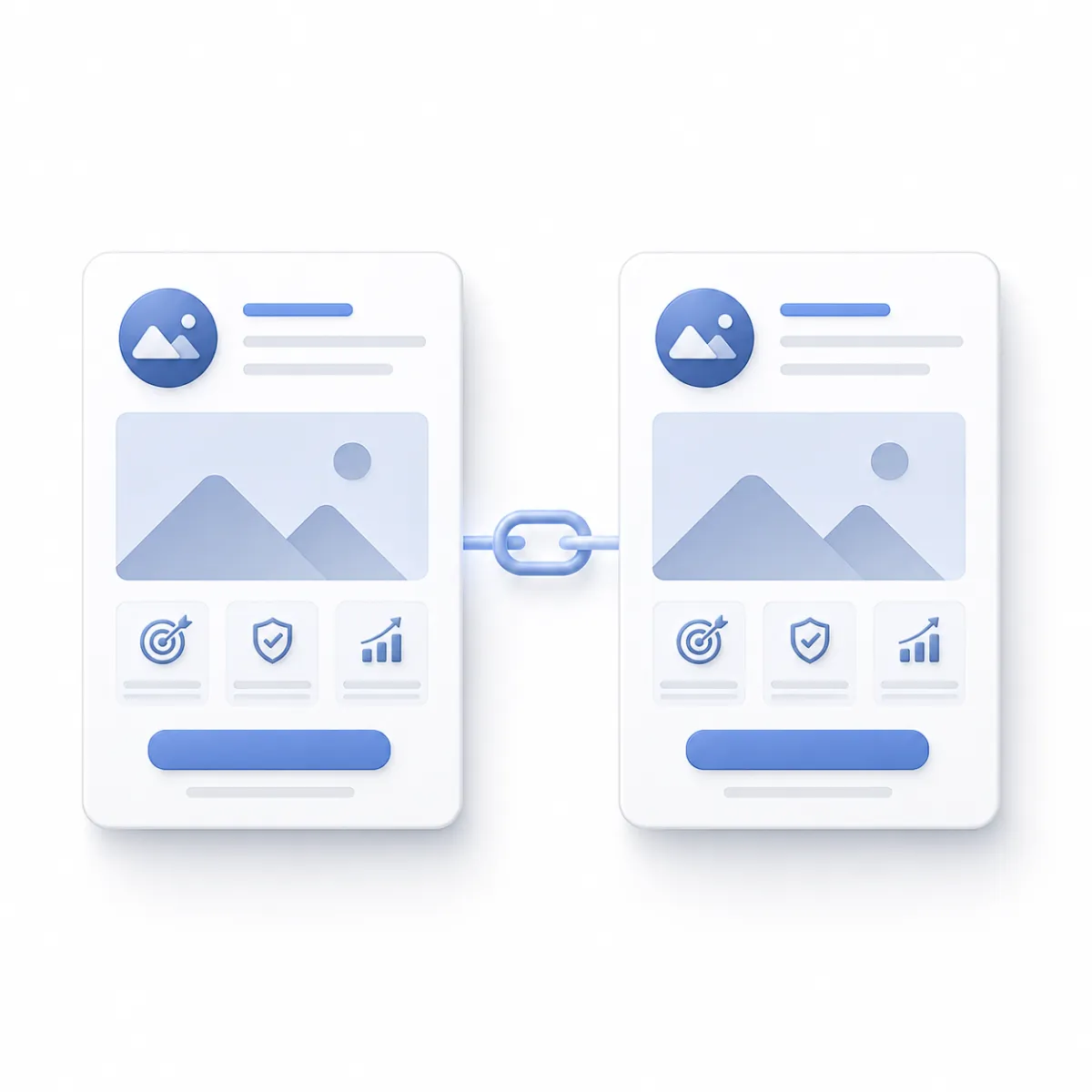
To fix ad-to-landing page mismatch, mirror buyer persona language from the ad into the landing page hero, proof, CTA, and form. Match the hook, promise, pain, target audience, proof, and next step so the buyer feels, “Yes, this is exactly what I clicked for.”
🧠 What Is Ad-to-Landing Page Match?
Ad-to-landing page match means the message in your ad matches the message on your landing page.
The buyer should feel a smooth path:
Ad says:
“Stop getting clicks from the wrong buyers.”
Landing page says:
“Stop getting clicks from the wrong buyers. Find the buyer persona leak in your funnel.”
That is match.
Bad match looks like this:
Ad says:
“Stop wasting money on ads.”
Landing page says:
“Full-service growth solutions for modern brands.”
That is mismatch.
The buyer clicked for one pain.
The page gave them corporate soup.
So they bounce.
👤 What Is a Buyer Persona?
A buyer persona is the one-person story inside your target audience.
It explains:
what the buyer wants
what hurts right now
why now matters
what they fear
what proof they need
what words they use
what first step feels safe
A buyer persona helps your ad and landing page speak the same language.
If the ad uses buyer persona pain words, the landing page should echo those words.
That tells the buyer:
“You are in the right place.”
🎯 Why Buyer Persona Words Matter After the Click
The click happens because something in the ad matched the buyer.
Maybe the ad named the pain.
Maybe it named the dream.
Maybe it named the moment.
Maybe it made the buyer feel seen.
So the landing page must keep that same thread.
If the ad gets attention with one buyer persona angle, but the page changes the angle, trust drops.
The buyer thinks:
“This is not what I expected.”
“This is too broad.”
“This is not for me.”
“This feels like a bait-and-switch.”
“I’ll look later.”
Then they leave.
The problem is not traffic.
The problem is message match.
🚨 The Big Mistake: Writing Ads and Pages Separately
Many teams write ads in one place and landing pages in another.
The ad team writes a sharp hook.
The page team writes a generic page.
The ad says:
“Getting leads who never buy?”
The page says:
“Marketing services to help your business scale.”
That breaks the promise.
A strong funnel uses one buyer persona thread from ad to page:
same pain
same target audience
same promise
same proof
same CTA direction
That is how clicks turn into action.
🧾 The Ad-to-Landing Match Checklist
Use this quick checklist.
✅ Match these 7 things
Buyer persona — same buyer
Pain — same problem
Promise — same result
Moment — same urgency
Proof — same trust need
CTA — same next step
Tone — same level of simple, urgent, or proof-based copy
If any one of these changes too much, bounce can rise.
1) 👤 Buyer Persona Match: Same Buyer From Ad to Page
The ad should call out the buyer.
The landing page should confirm it.
Weak match
Ad:
“For local service owners wasting ad spend.”
Page:
“We help businesses grow.”
Too broad.
Strong match
Ad:
“For local service owners wasting ad spend.”
Page:
“For local service owners who want booked calls without wasting more ad spend.”
That page keeps the same buyer.
✅ Buyer Persona Match Formula
Use this near the top of the page:
For [target audience] who want [result] without [pain].
Examples:
“For service business owners who want better leads without wasting ad spend.”
“For coaches who want clearer buyer persona messaging without sounding fake.”
“For busy founders who want a funnel fix without a long strategy project.”
“For teams getting clicks but not qualified calls.”
This line is simple.
But it can save the click.
2) 🩹 Pain Match: Same Problem, Same Words
Your ad hook usually names a pain.
Do not change it on the page.
If the ad says:
“Wrong leads?”
The page should not say:
“Optimize your acquisition engine.”
Say:
“Wrong leads are usually a buyer persona problem.”
Same pain. Clear language.
✅ Pain Match Examples
Ad hook
“Getting clicks but no buyers?”
Landing page hero
“Getting clicks but no buyers? Find the buyer persona mismatch before you spend more.”
Ad hook
“Leads keep ghosting?”
Landing page hero
“Leads keep ghosting? Your funnel may be asking the wrong buyer for the wrong next step.”
Ad hook
“High bounce after ad clicks?”
Landing page hero
“High bounce after ad clicks? Match your page to your buyer persona words.”
🧠 Why Pain Match Works
Pain match tells the buyer:
“You clicked for the right reason.”
That lowers confusion.
It also improves trust.
The buyer does not have to decode what the page is about.
They know.
3) 🌟 Promise Match: Same Result, No Bait-and-Switch
Your ad promise is the result people clicked for.
The page must repeat it fast.
Bad promise match
Ad:
“Find your funnel leak in 48 hours.”
Page:
“Learn about our full marketing system.”
That feels like a bait-and-switch.
Good promise match
Ad:
“Find your funnel leak in 48 hours.”
Page:
“Get a 48-hour buyer persona funnel audit and see the first leak to fix.”
That is aligned.
✅ Promise Match Formula
Use this:
Get [result] without [pain/risk] in [time].
Examples:
“Find the first funnel leak without rebuilding everything in 48 hours.”
“Get clearer buyer persona messaging without guessing.”
“Turn ad clicks into better-fit leads without more traffic.”
“Fix message match before your next campaign goes live.”
The page should make the ad promise feel real.
4) ⏰ Moment Match: Same “Why Now?”
Many ads work because they name the moment.
Examples:
before launch
before spending more
this week
before the next campaign
when bounce spikes
when leads go cold
If the ad uses a moment, the page should keep it.
✅ Moment Match Examples
Ad
“Before your next campaign, fix your buyer persona.”
Page
“Before your next campaign goes live, make sure the ad, page, proof, and CTA all match the same buyer persona.”
Ad
“Ad spend running? Check message match now.”
Page
“If ad spend is already running, every mismatch costs money. Start with the buyer persona words that got the click.”
Ad
“High bounce this week?”
Page
“High bounce this week is often a message match problem. Let’s compare the ad hook to the landing page hero.”
🧠 Why Moment Match Works
Moment match creates real urgency.
Not fake pressure.
The buyer already feels the timing.
You are simply naming it.
5) ⭐ Proof Match: Show the Proof the Buyer Needs
Your buyer persona has a proof need.
Some buyers need examples.
Some need reviews.
Some need steps.
Some need “what happens next.”
Some need proof near the CTA.
If the ad attracts a proof-seeker, the page must show proof early.
✅ Proof Match by Buyer Persona Type
Proof-Seeker
Needs:
like-me examples
case snippets
before/after copy
screenshots
FAQ answers
Page fix:
Put proof near the first CTA.
Pain-Now Buyer
Needs:
speed proof
what happens next
48-hour win
simple timeline
Page fix:
Put “what happens next” above the fold.
Time-Poor Buyer
Needs:
short steps
time tags
simple process
low-friction form
Page fix:
Use 3 steps and short blocks.
Budget-Starter
Needs:
what’s included
starter path
value clarity
low-risk CTA
Page fix:
Add pricing/value clarity near CTA.
Status-Chaser
Needs:
roadmap
expert process
premium path
success story
Page fix:
Show the success path and milestones.
✅ Proof Near CTA Rule
Fear spikes at the button.
So place proof:
under the first CTA
beside the form
above the pricing button
inside a micro-FAQ
near “book call”
near checkout
Example
Button: Get the 48-Hour Buyer Persona Audit
Proof line: “Includes ad-to-page match check, hero rewrite, proof placement review, and CTA fix.”
That makes the click safer.
6) 🔘 CTA Match: Same Next Step
The CTA in the ad and the page should feel connected.
If the ad says:
“Get the checklist,”
the page button should not say:
“Book a call.”
That is too big a jump.
If the ad says:
“Book the audit,”
the page should not bury the audit under a guide download.
Match the step.
✅ CTA Match Examples
Cold ad
Ad CTA:
“Get the checklist”
Page CTA:
“Download the Buyer Persona Funnel Checklist”
Good.
Warm ad
Ad CTA:
“Find the funnel leak”
Page CTA:
“Get the 48-Hour Funnel Audit”
Good.
Hot ad
Ad CTA:
“Book the audit”
Page CTA:
“Book the Buyer Persona Audit”
Good.
🪜 CTA by Stage
Cold buyer
Use:
Get the guide
Download checklist
Start here
Take the quiz
See the 3 steps
Warm buyer
Use:
Get the audit
See examples
Get the proof pack
Find the leak
Get the 48-hour plan
Hot buyer
Use:
Book the call
Start now
Choose Starter
Book the audit
Fix my funnel
The buyer persona stage decides the CTA size.
7) 🗣️ Tone Match: Same Energy From Ad to Page
Tone matters too.
If your ad is plain and direct, but your page is fancy and full of jargon, the buyer feels a shift.
That shift creates doubt.
Bad tone match
Ad:
“Wrong leads? Fix the message.”
Page:
“Activate scalable demand generation architectures.”
No.
Good tone match
Ad:
“Wrong leads? Fix the message.”
Page:
“Wrong leads often come from fuzzy buyer persona copy. Let’s find the first message leak.”
Same tone.
Simple. Clear.
🧠 The Ad-to-Landing Match Map
Use this table.
Ad Element Landing Page Match
Buyer named “For…” line near hero
Pain named same pain in headline
Promise made same result in subhead
Moment named same timing line
Proof hinted proof near CTA
CTA shown same or next-safe CTA
Tone used same simple language
This is your match map.
🧱 Hero Formulas That Stop Bounce
Your landing page hero must confirm the click fast.
Use one of these formulas.
Formula 1: Pain + Persona + Fix
Stop [pain] for [buyer persona] with [fix].
Example:
“Stop High Bounce for Ad Traffic With Buyer Persona Message Match.”
Formula 2: Click Promise + 48-Hour Win
Get [ad promise] in [time] without [risk].
Example:
“Find Your First Buyer Persona Funnel Leak in 48 Hours Without Rebuilding the Whole Page.”
Formula 3: For Line + Result
For [target audience] who want [result] without [pain].
Example:
“For service owners who want booked calls without wasting ad spend.”
Formula 4: Mistake + Fix
Your [thing] may not be broken. Your [buyer persona element] may be off.
Example:
“Your ads may not be broken. Your buyer persona message may be off.”
Formula 5: Moment + Action
Before [moment], fix [problem].
Example:
“Before your next campaign goes live, fix the ad-to-landing mismatch.”
✍️ 5-Line Ad-to-Landing Copy Block
Use this for your landing page top section.
✅ Hero Block Template
Line 1: Repeat the ad pain
“Getting clicks but no buyers?”
Line 2: Name the buyer persona
“For service owners running paid ads.”
Line 3: Name the likely mismatch
“Your landing page may not be using the same buyer persona words that got the click.”
Line 4: Promise the fix
“Get a 48-hour ad-to-landing match audit.”
Line 5: CTA
“Find the Message Mismatch.”
This is simple.
And it keeps the click alive.
🧾 Landing Page Layout for Strong Ad Match
Use this layout.
✅ Ad-Matched Landing Page Wireframe
Hero: repeat ad pain + buyer persona
Subhead: repeat promise
CTA: same next step
Proof: near CTA
“What happens next” block
3-step process
Micro-FAQ
Final CTA
This layout reduces confusion.
📌 What Goes Above the Fold?
The first screen matters.
Put these above the fold:
same pain from the ad
clear buyer persona “For…” line
same promise
CTA
one proof or safety line
Example:
Headline: Getting Clicks But No Buyers?
For line: For service owners running ads who want qualified calls without wasting spend.
Promise: Find the first buyer persona mismatch in your ad-to-page flow.
CTA: Get the 48-Hour Match Audit
Proof line: Includes hook match, hero rewrite, proof placement, and CTA check.
That is strong.
🧩 Hook Matching Examples
Example 1: Wrong Leads
Ad:
“Wrong leads from your ads?”
Landing page:
“Wrong leads from your ads? Your buyer persona message may be too broad.”
CTA:
“Find the Persona Leak”
Proof:
“We check the ad hook, landing page hero, CTA, and lead magnet for fit.”
Example 2: High Bounce
Ad:
“High bounce after paid clicks?”
Landing page:
“High bounce after paid clicks? Match the ad promise to the page hero.”
CTA:
“Get the Match Checklist”
Proof:
“Use the checklist to compare pain, promise, proof, and CTA.”
Example 3: Low Call Quality
Ad:
“Calls booked, but bad fit?”
Landing page:
“Calls booked, but bad fit? Your page may be attracting the wrong buyer persona.”
CTA:
“Get the Buyer Fit Audit”
Proof:
“We review For/Not For copy, CTA stage, proof, and offer match.”
Example 4: Cold Traffic
Ad:
“Not sure why buyers bounce?”
Landing page:
“Not sure why buyers bounce? Start with the ad-to-landing match checklist.”
CTA:
“Download the Checklist”
Proof:
“Simple 10-point check for pain, promise, proof, and CTA.”
⭐ Proof Blocks You Can Use Near CTA
Use these plug-and-play proof blocks.
Process proof
“We check your ad hook, landing page hero, proof placement, CTA, and form friction.”
First-win proof
“In 48 hours, you will know the first message mismatch to fix.”
Like-me proof
“Built for funnel owners getting clicks but weak leads.”
Scope proof
“You get one clear fix-first map. No full rebuild needed.”
Safety proof
“Start with the audit before making a bigger funnel change.”
Proof should make the next click feel safer.
❓ Micro-FAQ Under the CTA
A micro-FAQ can reduce bounce and form drop-off.
Use 3–5 questions.
Example Micro-FAQ
What do you check?
We check ad hook, page hero, buyer persona words, proof placement, CTA match, and form friction.
Do I need to rebuild the page?
Not first. The goal is to find the first mismatch and fix that before changing everything.
What is the 48-hour win?
You will know the first ad-to-page mismatch and get a simple fix plan.
Is this for cold traffic?
Yes, especially if paid clicks are bouncing or lead quality is weak.
What if the ads are the problem?
We check the ad and the page together, because mismatch can happen on either side.
🧯 Form Friction Fixes
Sometimes the page matches.
But the form kills the lead.
The buyer clicks the CTA, then sees a long form and leaves.
That is form friction.
✅ Signs of Form Friction
CTA clicks are high
form starts are low
form completion is low
mobile drop-off is high
people abandon booking
hot leads do not finish
This is not always a buyer persona problem.
But buyer persona affects how much friction the buyer will tolerate.
A hot buyer may fill out more.
A cold buyer will not.
✅ Form Fixes by Buyer Stage
Cold buyer form
Ask for:
email only
maybe first name
CTA:
“Send Me the Checklist”
Warm buyer form
Ask for:
name
email
website
main problem
CTA:
“Get the Audit”
Hot buyer form
Ask for:
name
email
company
website
goal
timing
budget range if needed
CTA:
“Book the Call”
Do not ask cold buyers hot-buyer questions.
✅ Form Microcopy Examples
Use:
“Takes 2 minutes.”
“No pressure. We’ll send the checklist.”
“We review your page and send the first fix.”
“After you submit, you’ll see the next step.”
“Use your best email so we can send the audit.”
Clarity lowers friction.
📱 Mobile Notes for Ad-to-Landing Match
Ad clicks often happen on mobile.
So the mobile page must match fast.
✅ Mobile checklist
headline repeats ad pain
“For…” line visible without scrolling far
CTA button above the fold
proof line near CTA
form is short
page loads fast
paragraphs are short
button is full width
no tiny comparison tables
no confusing popups
Mobile buyers are quick.
If they have to work, they leave.
📊 KPIs That Show Ad-to-Landing Match Is Working
Track these:
Ad KPIs
CTR
CPC
relevance
qualified clicks
Page KPIs
bounce rate
time on page
scroll depth
CTA clicks
form starts
form completions
Funnel KPIs
lead quality
show rate
close rate
cost per qualified lead
time-to-yes
If bounce drops and lead quality improves, match is getting better.
If CTR rises but lead quality falls, the ad may be too broad.
If CTA clicks rise but forms do not complete, fix form friction.
🧪 Weekly Tests to Improve Match
Run one clean test per week.
Test 1: Exact hook match vs broad hero
Ad hook:
“Wrong leads from ads?”
Variant A page hero:
“Wrong leads from ads?”
Variant B page hero:
“Grow with better marketing.”
Track bounce and CTA clicks.
Test 2: Proof near CTA vs proof lower
Variant A:
Proof under CTA.
Variant B:
Proof near bottom.
Track CTA clicks and conversions.
Test 3: Small CTA vs big CTA
Variant A:
“Get the Checklist”
Variant B:
“Book a Call”
Track lead quality and close rate.
Test 4: Short form vs long form
Variant A:
email + website
Variant B:
name + email + website + problem + budget
Track completion and lead quality.
Test 5: Buyer words vs jargon
Variant A:
“Wrong leads”
Variant B:
“Low-quality demand capture”
Track CTR, bounce, and conversions.
Simple usually wins.
🧠 How to Build an Ad-to-Landing Match Sheet
Make a simple sheet.
✅ Columns
Ad name
Target buyer persona
Ad hook
Ad promise
Ad CTA
Landing page headline
Landing page promise
Landing page CTA
Proof near CTA?
Form length
Bounce rate
CTA clicks
Conversion rate
Lead quality
First fix
This gives you a clear view.
If ad hook and landing page headline do not match, start there.
🧾 Example Match Sheet Row
Ad name: Wrong Leads Ad
Buyer persona: small service owner
Ad hook: “Wrong leads from ads?”
Ad promise: find buyer persona mismatch
Ad CTA: get audit
Page headline: “Find the Buyer Persona Leak in Your Ad Funnel”
Page promise: 48-hour audit
Page CTA: get the audit
Proof near CTA: yes
Form length: 4 fields
Bounce: high
First fix: repeat exact ad hook in hero
Sometimes the fix is that simple.
❓ FAQ — Ad-to-Landing Match and Buyer Persona
1) What is ad-to-landing page match?
Ad-to-landing page match means the landing page repeats and supports the same buyer persona, pain, promise, proof, and CTA that the ad used to get the click.
2) How does buyer persona affect landing page bounce?
If the landing page does not match the buyer persona words from the ad, the buyer may feel confused or misled and bounce.
3) What should match between an ad and landing page?
Match the buyer, pain, promise, moment, proof, CTA, and tone. The page should feel like the natural next step after the ad.
4) What is the best hero formula for ad traffic?
Use: “Stop [pain] for [buyer persona] with [fix]” or “Get [promise] without [risk] in [time].”
5) Should the landing page headline copy the ad hook?
Often, yes. Repeating the same pain or promise confirms the click and reduces confusion.
6) Where should proof go on the landing page?
Place proof near the CTA, especially for warm and hot traffic. Buyers need trust most right before they act.
7) What CTA should we use for cold ad traffic?
Use a small CTA like “Get the checklist,” “Download the guide,” or “See the 3 steps.” Cold buyers may not be ready for a call.
8) What CTA should we use for warm ad traffic?
Use a medium CTA like “Get the audit,” “See examples,” “Get the proof pack,” or “Find the leak.”
9) How do forms affect ad-to-landing match?
If the form asks too much too soon, buyers drop. Match form length to buyer stage: short for cold, moderate for warm, deeper for hot.
10) What KPIs show ad-to-landing match is improving?
Bounce drops, time on page rises, CTA clicks increase, form completion improves, lead quality improves, and close rate rises.
11) What is the biggest ad-to-page mismatch mistake?
The biggest mistake is using a specific ad hook but sending clicks to a broad, generic landing page.
12) How often should we test ad-to-landing match?
Test weekly. Change one thing at a time, such as hero match, proof placement, CTA size, form length, or buyer persona wording.
📌 Key Takeaways
Clicks are not the win; matched clicks are the win
Ad-to-landing match means the ad and page use the same buyer persona thread
Match buyer, pain, promise, moment, proof, CTA, and tone
Repeat buyer persona words in the landing page hero
Place proof near the CTA
Match CTA size to buyer stage
Reduce form friction, especially on mobile
Test one match point per week
This is buyer clarity inside The Buyer Clarity System™
🎁 Complimentary Ebook
Want the ad-to-landing match checklist, hero formulas, and buyer persona word-mirroring worksheet?
Grab our COMPLIMENTARY Buyer Clarity Guide here:
👉 Download your complimentary ebook now
🧭 Final Word
A click is a promise.
The ad makes the promise.
The landing page must keep it.
Use the same buyer persona words.
Name the same pain.
Repeat the same promise.
Show proof near the button.
Make the CTA feel like the next right step.
That is how you stop bounces and fix your funnel by fixing your buyer persona first—inside The Buyer Clarity System™.
